

Congressional redistricting in Alabama has ignited heated discussions following the U.S. Supreme Court’s May 2026 directive, which authorized the state to activate its 2023 legislatively approved map.
The Supreme Court vacated lower-court rulings that had initially blocked this map, instructing a review influenced by its recent verdict on a Louisiana case. This decision clarified the interpretation of Section 2 of the Voting Rights Act, which pertains to drawing congressional districts based on race. The 2023 Alabama map now includes solely one district with a majority-black voting-age population, a contrast to the two districts previously required.
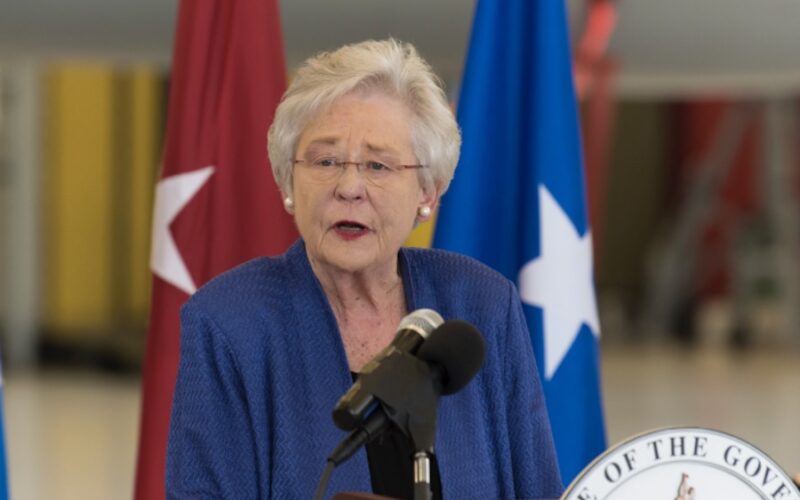
With this new framework in place, Alabama can move forward with the 2023 district boundaries for the upcoming 2026 midterm elections. Governor Kay Ivey has called for a special primary election on August 11, 2026, affecting districts 1, 2, 6, and 7, thus overriding earlier primary results and enabling candidates to participate under the new configurations.
This redistricting plan, predominantly crafted by the Republican legislature, preserves a total of seven districts while primarily grouping black voters in the Seventh District, historically represented by Democrat Terri Sewell.
As it stands, the updated map retains one Democratic seat in the Seventh District while the remaining six lean Republican. This structure arises from the design of the 2023 map, established prior to decisions mandating further alterations.
Should this proposal bring about change, Alabama’s U.S. House delegation would likely transition from a current 5-Republican, 2-Democrat split to a projected 6-1 advantage.
Critics within the Republican Party argue that maintaining any Democratic seat is unwarranted in such a strongly partisan state. They suggest that further modifications could easily achieve a 7-0 Republican delegation without breaching equal protection laws.
Alabama’s voting details from the 2024 presidential election reflect its Republican dominance, with Donald Trump securing 1,462,616 votes (64.57 percent) against Kamala Harris’ 772,412 votes (34.10 percent). This context indicates that the proposed map would likely result in six Republican seats and one for Democrats.
In contrast, Massachusetts showcased a total of 2,126,518 votes (61.22 percent) for Harris and 1,251,303 votes (36.02 percent) for Trump, yet all nine congressional seats are controlled by Democrats, achieving a 9-0 delegation. Observers emphasize how redistricting can lead to representations that do not align completely with statewide presidential voting patterns. Internal GOP critics highlight Alabama’s decision to allow a Democratic foothold despite a 65-34 Republican tilt, while Massachusetts exhibits a consistent Democratic majority in a state that votes 61-36 in their favor.
“For absolutely no reason [Governor Kay Ivey] is giving Democrats a free seat in AL-07,” remarked conservative commentator Ryan Girdusky. “The seat is racially gerrymandered (which is against the law), drawing in black voters from across the state into one district.”
