
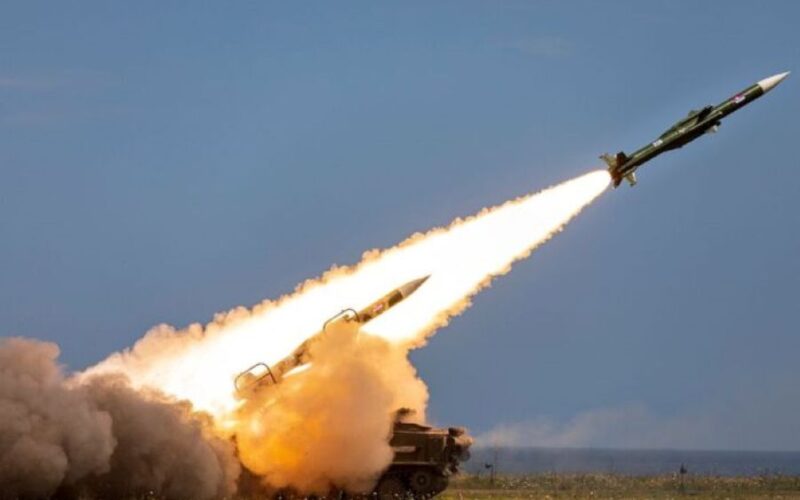
U.S. forces have initiated a new round of airstrikes against Iranian military targets, specifically targeting Qeshm Island near the Strait of Hormuz. This action aligns with President Trump’s administration’s ongoing strategy to confront threats to American personnel and commercial shipping.
According to three U.S. officials, the recent strikes are a defensive measure against consistent Iranian attacks on American military and maritime operations.
Context of the Strikes
The military action occurred just before the Tuesday midterm elections, amidst simultaneous diplomatic efforts by Washington and Tehran to resolve eight months of escalating conflict.
Limited in scope, these strikes were characterized by officials as not indicative of a return to extensive combat operations.
Instead, the operation focused on Iranian military capabilities deemed to pose an immediate risk to U.S. interests operating in the strategic Strait of Hormuz.
In recent weeks, Iran’s Islamic Revolutionary Guard Corps has repeatedly targeted U.S. military aircraft, including both manned and unmanned systems, prompting significant responses from American forces.
“It’s just a minor attack. It wasn’t war.”
President Trump reveals U.S. forces struck an Iranian anti-aircraft facility overnight, describing the operation as limited rather than a major military escalation.
Trump says Iran spent roughly two months building the facility while the U.S. watched its construction. Once it was completed, American forces moved in and destroyed it, according to the president.
Trump also claims Iran has no operational aircraft or air defenses left following previous U.S. strikes. | @foxandfriends
Download the FOX News app for the latest details: https://t.co/ISpW9Fc0R3
— Fox News (@FoxNews) November 3, 2026
As confrontations have increased, U.S. forces have had to interrupt drone and missile threats targeting vessels in the region.
Operational Details
One official revealed that after the Revolutionary Guard engaged U.S. aircraft with surface-to-air missiles, American forces had occasionally struck back at Iranian missile launchers.
Monday’s operations reportedly followed an attempted Iranian strike against U.S. aircraft, leading to the destruction of the responsible launcher.
A U.S. official noted, “This was a defensive measure for Iranians using surface-to-air missiles against U.S. assets.”
Reports from Iranian state media confirmed that multiple explosions occurred on Qeshm Island.
POLL: Will You Support Trump And His Candidates In The Midterms?
The significance of Qeshm Island cannot be overstated, as it is strategically located near a critical shipping route for global oil supplies, which has been a contentious flashpoint in this ongoing conflict.
Diplomatic Considerations
Trump had previously indicated there would be no strikes before the elections, emphasizing that the recent military actions are intended as self-defense rather than a precursor to further military escalation.
Despite the tensions, thousands of U.S. troops remain in the region as Washington maintains a naval blockade aimed at bringing Iranian oil exports to a halt.
Additionally, more American forces, including a third aircraft carrier, are en route to the Middle East, enhancing military preparedness in case diplomatic solutions falter.
Vice President JD Vance remains hopeful regarding potential diplomatic solutions. Recently, he engaged in discussions with Iranian officials to explore paths toward resolution.
While Trump has expressed optimism about the negotiations, there remain concerns about the complicated demands presented by Iran.
RELATED: Ominous New War Signal Emerges As Trump Issues Major Warning To Iran
Vance conveyed, “We’ve had a number of good conversations with the Iranians,” suggesting prospects for a negotiated settlement are still alive.
Economic Impact and Future Outlook
The conflict has had significant economic repercussions, escalating oil prices and costing American taxpayers billions. Recent reports indicate a drop in oil prices as talks appear to progress.
Trump has emphasized this reduction in prices during public addresses, reassuring the public about the state of the conflict while asserting that both sides seem eager for a resolution.
Nevertheless, Tehran continues to push its preconditions for peace, adding to uncertainty regarding future negotiations.
Iranian Parliament Speaker Mohammad Bagher Ghalibaf asserted that the initiative for resolving tensions lies with the United States.
As Israel and other allies urge Washington to maintain pressure on Iran, Trump’s challenge remains in balancing military readiness and the pursuit of a diplomatic solution.
With additional military support in the region and ongoing talks, the atmosphere remains tense.
As it stands, U.S. officials consistently describe the Qeshm Island operation as a limited action taken in self-defense, not the onset of another extensive military campaign against Iran.
POLL: Should Sanctuary Cities Be Banned From Federal Funding?
