

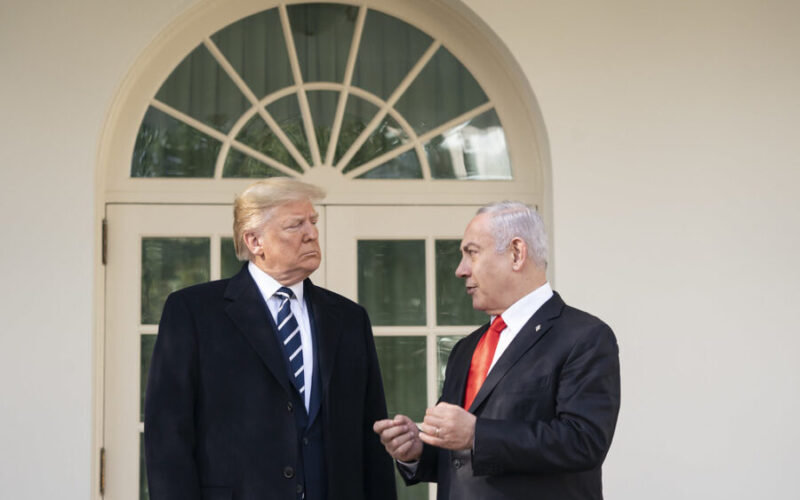
On Tuesday, President Donald Trump declared that the U.S. would halt its annual financial assistance to Israel at the close of this year, marking a critical foreign policy change ahead of the elections.
His rationale is straightforward: Israel is in a strong position to finance its own military needs.
Trump stated, “They don’t need it. Israel is a very thriving country,” during an appearance on “Fox & Friends.”
He mentioned that Israeli Prime Minister Benjamin Netanyahu had previously suggested the cessation of aid, a topic they have discussed over the years.
Currently, the U.S. provides approximately $4 billion annually, but Trump confirmed that would end by year’s end.
The president elaborated that this assistance comprises military support, cash, and various forms of aid, emphasizing that Israel can still acquire American arms. He hinted at the potential for future aid if deemed necessary.
However, Trump’s announcement raises significant concerns about how this will impact the ongoing U.S.-Israel security assistance agreement, which is set to deliver nearly $3.8 billion each year until fiscal 2028.
Netanyahu has historically expressed support for reducing Israel’s dependence on U.S. military funding. However, the specific mechanics for enforcing Trump’s year-end deadline remain uncertain.
BREAKING: President Trump says the U.S. will end its roughly $4 billion in annual aid to Israel by the end of the year, adding that Prime Minister Benjamin Netanyahu agreed to the decision. https://t.co/Saz4kC166E
— Breaking911 (@Breaking911) November 3, 2026
This announcement arrives as Republicans strive to protect their majorities in Congress while Democrats aim to gain leverage over Trump’s agenda.
With all 435 House seats and 35 Senate seats up for grabs, Democrats require a net gain of three seats to take control of the House and four for the Senate.
Currently, Republicans hold 53 Senate seats, allowing them the chance to lose three while preserving control via Vice President JD Vance’s tie-breaking vote.
Though Trump himself is not on the ballot, the election results will influence the feasibility of his initiatives during his final two years in office.
A Republican majority would enable smoother progress on his legislative goals, while setbacks in either chamber could empower Democrats to obstruct those efforts and investigate his administration.
