

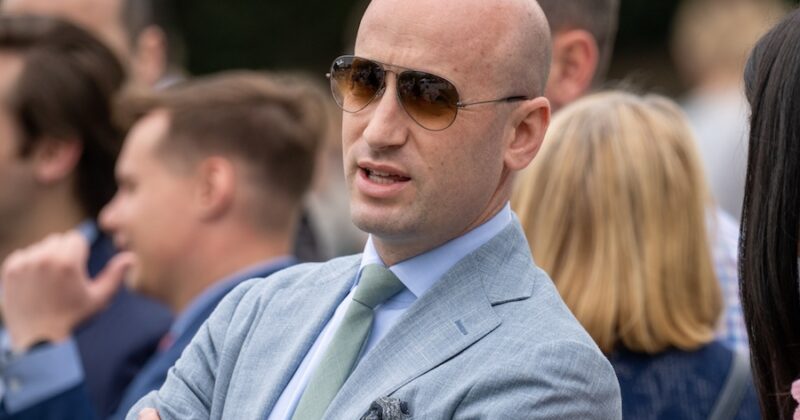
Stephen Miller has introduced a new barrier for lobbyists trying to meet with White House staff, signaling a shift in the administration’s approach.
The newly appointed chief of staff has mandated that any policy meetings involving registered lobbyists receive prior approval from the White House counsel’s office, as reported by POLITICO.
This requirement presents a formal checkpoint for K Street as it learns to navigate the landscape shaped by a loyalist to President Trump who is known to be resistant to traditional lobbying efforts.
“No President in history has fought more relentlessly, selflessly or courageously for the American People than President Trump. Following his example, White House staff are expected to dedicate their time unwaveringly to the working people of the nation,” stated Miller’s directive.
The Office of Public Liaison will serve as the primary point of contact for external stakeholders going forward.
This directive follows debates regarding access that lobbying firms had under Miller’s predecessor, Susie Wiles, who had ties to several lobbying firms.
Calley Means, a former adviser, claimed that Ballard Partners had too much influence in the White House, pointing to Continental Strategy, where Wiles’ daughter is a partner, as problematic.
Both firms have strongly denied these allegations, with Wiles’ spokesperson defending her commitment to the Trump agenda.
Ballard Partners is projected to generate over $100 million this year, a significant increase from previous years.
Unlike his predecessor, Miller is characterized as policy-driven with little interest in personal connections within the lobbying scene.
<p“Lobbyists can’t easily sway him,” remarked Hunter Morgen, who has worked closely with Miller. “He’s primarily focused on the policy outcomes that benefit the president's agenda.”
Miller’s track record includes a significant role in shaping Trump’s immigration policy and advocating for America First principles, revealing his longstanding ties to Trump dating back to 2016.
In the interim, lobbyists are exploring alternative methods to present their cases, with some focusing on establishing direct communication with Trump rather than approaching Miller.
Corporate executives have found new avenues to voice their concerns directly to Trump, either through events or phone communications.
“Lobbying him is nearly impossible,” remarked one lobbyist, noting that even familiar faces struggle to influence him. “He’s more reasonable than assumed, but immunity to lobbying is evident.”
Wiles’ supporters maintain that cultivating a broad network is essential, reflecting Trump’s preference for relational politics.
A spokesperson emphasized that Trump thrives on relationships—not just with lobbyists, but also with donors and political figures, which they believe helps further his agenda.
Miller has engaged with donors at White House events, leading some to speculate that he may not completely distance himself from those networks.
His strong connections lean towards Trump’s ideological allies, especially those favoring stricter immigration controls and health reforms, suggesting opportunities for collaboration.
The administration reaffirmed that Trump’s priorities will govern access to the White House.
“President Trump’s loyalty is to the American people, not lobbyists. His team is dedicated to advancing the President’s agenda, not the agenda of D.C. lobbyists,” said White House spokesperson Taylor Rogers. “All components of the White House are unified in executing President Trump’s America First agenda.”
