

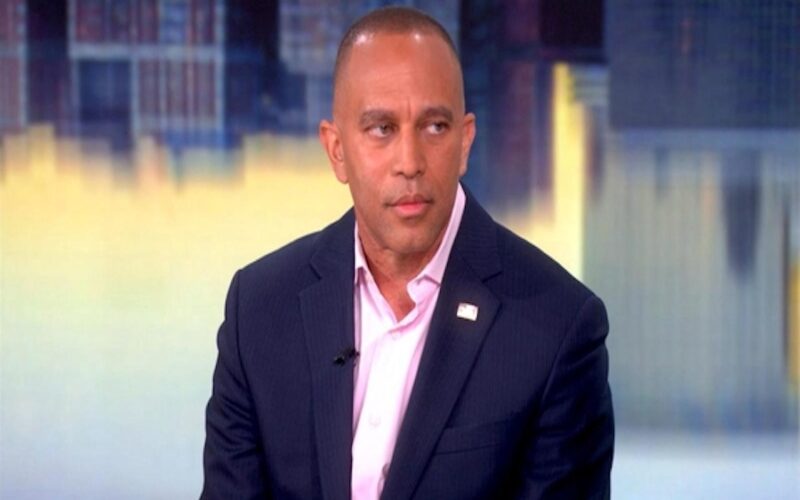
Democratic Leader Hakeem Jeffries is grappling with an awkward beginning to his expected speakership, as errors during two crucial floor votes have gifted Republicans unexpected wins shortly after the Democrats’ major midterm election celebration.
This has ignited frustration among party members, who are increasingly questioning whether the leadership is ready to navigate a House majority after years spent in the minority.
With Jeffries eyeing the speaker’s gavel for when the new Congress convenes in January, concerns about the party’s discipline have swiftly emerged. Current forecasts suggest Democrats could secure at least 255 seats, though several races remain undecided.
The first blunder occurred when 11 House Democrats failed to appear for a key procedural vote regarding impeachment proceedings against Secretary of War Pete Hegseth.
Introduced by Republican Rep. Thomas Massie from Kentucky, the eight articles of impeachment against Hegseth prompted GOP leadership to move the resolution to committee instead of allowing an immediate vote.
The GOP successfully navigated this maneuver with a 211-204 outcome, and the absence of Democrats drew substantial backlash.
If a sufficient number of Democrats had shown up, they might have swayed the vote. However, the situation was complicated by some absent Republicans, which meant results could have hinged on their return.
This failure caused outrage among Democrats who had long called for Hegseth’s removal. Fred Trump III, a relative of President Trump, expressed criticism on X, stating, “I may have to rethink my support of Hakeem Jeffries after the Hegseth impeachment vote.”
He pointed out the shocking number of absences, which allowed Republicans to secure a win.
Progressive activists were also discontented, highlighting the Democratic leadership’s inability to deliver when attendance was critical.
Some Democrats attributed their absences to being stuck in Washington traffic, with New Mexico’s Rep. Melanie Stansbury offering a heartfelt apology for missing the vote.
Reports indicated that many Democrats were returning from a nearby political fundraiser when they encountered delays. Others cited medical issues or family emergencies.
The whole episode was especially awkward for Jeffries, who has been vocal about demanding accountability from Hegseth for the administration’s military policies.
However, the troubles for Jeffries didn’t stop there. The following day, Democrats faced another defeat as Republicans successfully pushed through a veterans-related bill via a voice vote, despite Democratic leadership urging members to reject the bill.
None of the Democrats called for a recorded roll-call vote, allowing Republicans to advance the bill without individual lawmakers having to publicly state their positions.
Democrats accused the GOP of manipulating parliamentary rules to avoid having their members publicly oppose veterans’ benefits.
Mike Nellis, a Democratic strategist, acknowledged the frustration but cautioned that these issues shouldn’t be viewed as a serious challenge to Jeffries’ leadership aspirations.
He stated that while vote whipping appeared to be a problem, there seemed to be no significant challenger to Jeffries’ bid for the speakership.
In contrast, some Democrats defended Jeffries, arguing that missing votes can happen to any party and shouldn’t be attributed solely to leadership failures.
Katherine Clark, the House Minority Whip, emphasized the need for lawmakers to improve their attendance for critical votes.
Rep. Jared Moskowitz echoed this sentiment, insisting that the responsibility does not rest on leadership alone.
As Jeffries aims to become speaker in January, this chaotic week has been a litmus test of his capacity to maintain order among Democrats.
With the party having celebrated an electoral triumph, they now face the imperative to effectively lead on Capitol Hill amid these unprecedented challenges.
Jeffries’ recent procedural setbacks have already put his leadership under scrutiny as he prepares to take control of the House.
