
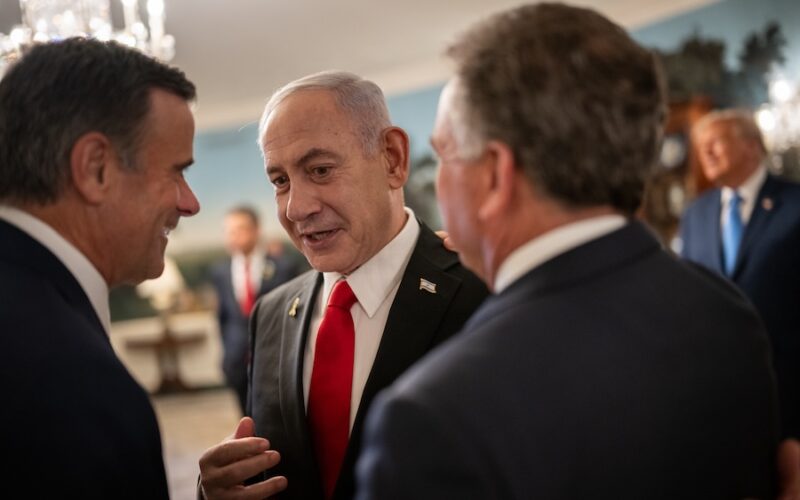
Israeli Prime Minister Benjamin Netanyahu finds himself in a precarious position following a highly scrutinized national election that has left his coalition without a parliamentary majority. This development signals the start of what could be weeks of negotiations over the direction of the country.
The recent election, which took place on Tuesday, was another crucial moment for Israel’s longest-serving leader. His tenure has faced significant challenges, including ongoing military conflicts and deepening societal divisions.
Despite forecasts of a potential defeat, Netanyahu’s conservative Likud party emerged as the largest faction in parliament, keeping him in the running for another term.
A noteworthy increase in support for Arab-led political parties has complicated this election cycle, presenting an opportunity for Netanyahu’s rivals to potentially shape the next government.
With around 94 percent of votes counted, Netanyahu’s right-wing and religious alliance is estimated to win 53 out of 120 seats in the Knesset, eight seats short of the majority needed. The opposition, led by former military chief Gadi Eisenkot, is projected to secure 48 seats, while Arab-led parties are expected to gain 19 seats.
Netanyahu’s Likud party is projected to take 26 seats, followed by Eisenkot’s Yashar party at 21 and former Prime Minister Naftali Bennett’s B’Yachad party with 12 seats.
This outcome signifies a notable setback for Netanyahu, whose former coalition held 68 seats, although he remains in a position to negotiate a possible return to leadership. President Donald Trump, who endorsed Netanyahu ahead of the polls, praised his stronger-than-expected result.
The election also marked a historic achievement for Israel’s Arab communities, as the Joint List and Ra’am parties are set to secure a total of 19 parliamentary seats, surpassing their previous record. These gains could afford Arab-led parties substantial leverage in the formation of the next government.
Yet, some opposition factions have expressed hesitance to collaborate with Arab parties, complicating Eisenkot’s pathway to a governing majority. The election atmosphere has been further disrupted by allegations of foreign interference.
The Central Elections Committee of Israel has initiated an inquiry into claims that foreign entities attempted to sway the election through questionable funding practices.
Likud has alleged that the election results were compromised, although Israeli officials have found no solid evidence of widespread fraud. Justice Noam Sohlberg, chairman of the Central Elections Committee, stated that while the allegations lack substantiation, they still warrant further exploration.
Accusations by Netanyahu’s allies have implicated Qatar in potential electoral interference, a claim that Qatar has denied, deepening the divisions between Netanyahu and his adversaries as final results are awaited.
In accordance with Israel’s parliamentary system, President Isaac Herzog will engage with political parties to nominate a candidate for government formation. Netanyahu could still maintain power through a coalition, while Eisenkot could take over if he garners enough parliamentary support.
If neither faction can establish a majority, Israel may face yet another election, prolonging a period of uncertainty for one of America’s key partners in the Middle East.
