

A federal judge has issued a severe sentence in Minnesota’s extensive pandemic-related fraud case, giving a lengthy prison term to a key participant for stealing funds meant for vulnerable children.
This case is part of the broader Feeding Our Future investigation, which revealed a complex scheme featuring fake meal records, false reimbursement claims, and the embezzlement of millions from federal nutrition initiatives during the COVID-19 pandemic.
The repercussions have led to numerous convictions and increased scrutiny on Minnesota officials who were warned multiple times about potential fraud. Prosecutors labeled the operation as a coordinated attempt to take advantage of emergency government assistance programs on an unprecedented scale.
On Wednesday, U.S. District Judge Nancy Brasel sentenced Salim Said, 37, to 30 years in federal prison due to his participation in the staggering $250 million Feeding Our Future fraud. In addition to prison time, Said must pay over $44 million in restitution, as reported by FOX 9.
Said was found guilty in 2025 on 21 counts of criminal activity, including wire fraud and money laundering, after prosecutors illustrated how he exploited a federal initiative aimed at providing meals for low-income children.
Prosecutors indicated that Said and his partners submitted thousands of fraudulent claims over 21 months, earning government payments for meals that weren’t actually provided.
At one point, Safari Restaurant claimed to serve around 6,000 meals each day, but evidence showed that only about 40 individuals came daily to pick up food.
BREAKING: Former Safari Restaurant owner Salim Said sentenced to 30 years in prison for his role the 0 million feeding our future fraud scheme https://t.co/ymKhrOJEcf
— Libs of TikTok (@libsoftiktok) October 29, 2026
Authorities also found that Said expanded the operation by establishing additional fictitious food distribution sites across Minnesota, including in Willmar, St. Cloud, and Mankato. Prosecutors linked Said and his partners to roughly $44 million in fraudulent claims, which encompassed funds obtained through other participants’ operations.
Investigators disclosed that proceeds from the fraud financed lavish real estate ventures, luxury cars, and other high-value assets, including a residence worth about $1.2 million. While federal prosecutors sought a 40-year sentence, claiming that Said was a key orchestrator of the scheme, his lawyers requested 12 years, arguing that the head of Feeding Our Future, Aimee Bock, held greater control.
During the hearing, Said expressed regret after previously insisting on his innocence during the trial. Judge Brasel recognized his challenging background but dismissed the notion that it significantly mitigated his accountability for the crimes.
“You took more than taxpayer money to enrich yourself,” Brasel told Said, according to Minnesota Public Radio. “You took the reputation of our state down with you.”
This sentencing coincides with another significant sentence in the probe, where Bock received a 41-and-a-half-year prison term earlier this year for her role in the scandal.
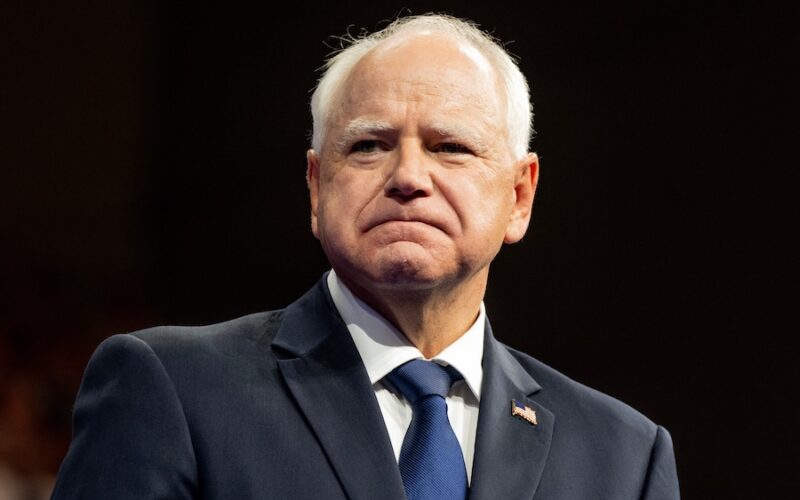
For Minnesota Democrats, this scandal has become a contentious political issue, particularly for Governor Tim Walz, who has faced backlash regarding his management of fraud complaints.
State auditors had noted that the Minnesota Department of Education received multiple warnings about Feeding Our Future but failed to ensure proper oversight, allowing the organization to investigate its own practices at times.
Former President Donald Trump has frequently criticized Walz over the scandal, highlighting the considerable financial losses as a sign of inadequate accountability in state governance.
Following ongoing political pressure stemming from the fraud investigations, Walz announced in January that he would not pursue reelection.
With Said now sentenced to three decades, this case represents another pivotal chapter in an investigation exposing significant gaps in the oversight of federally funded assistance programs.
