

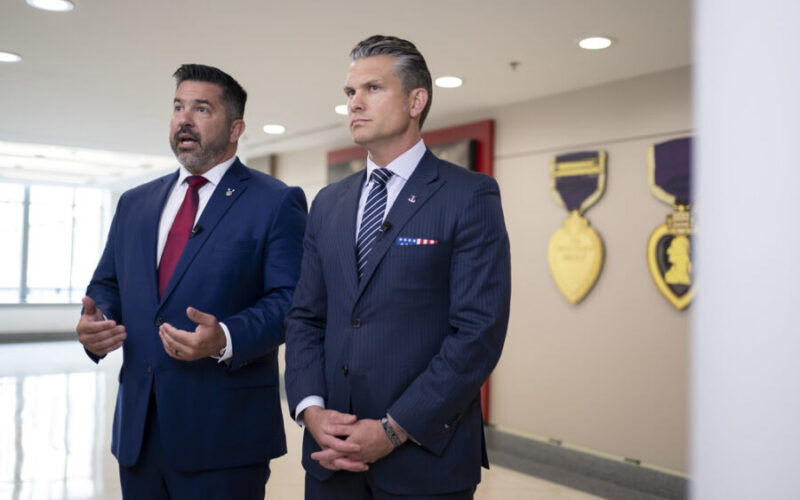
The Pentagon has launched the FORTRESS America initiative, designed to enable vital military bases within the continental U.S. to operate without external assistance for at least 90 days.
This program, fully named Federal Operations for Resilience, Troop Resources, Energy, Supply, and Survivability, was officially introduced by Defense Secretary Pete Hegseth on September 30. It serves as a crucial national insurance policy aimed at minimizing dependence on civilian power systems, overseas supply routes, and single-source materials.
According to the initiative, military bases will need to provide their own electricity, water, fuel, and communications capabilities. Power sources must be independent, resilient, and include backups. Options being explored involve portable nuclear reactors, extensive battery storage, and microgrids that can operate independently from the civilian power grid.
These advancements would permit crucial operations, including command centers and logistics, to function smoothly even in case of disruptions caused by cyberattacks, sabotage, or other threats. This initiative builds upon previous efforts, particularly the Army’s Janus program, which has received contracts worth up to $2.2 billion for the deployment of microreactors at multiple bases in the coming years.
Resilience in supply chains is another key component, as Hegseth mentioned. The FORTRESS initiative emphasizes the need for strategic reserves of essential items like munitions, fuel, electronics, and medical supplies, such as blood. The size of these reserves will be dictated by anticipated wartime consumption levels.
The plan also mandates at least two viable production pathways for crucial goods to avoid vulnerabilities. Officials are committed to bringing back significant manufacturing processes—especially those related to rare earth elements, specialized metals, semiconductors, and propellants—back to U.S. soil.
POLL: Do You Approve Of Secretary Of War Pete Hegseth?
FORTRESS is strategic deterrence in action, ensuring our defenses are hardened, proactive, and ready.
I created FORTRESS America because we can no longer rely on two oceans to protect us. That outdated assumption no longer reflects the threats we face.
President Trump and…
— Sean Parnell (@SeanParnellASW) October 25, 2026
The initiative is incorporating the Civil Reserve Manufacturing Network to pinpoint commercial manufacturing capabilities that could pivot to defense production in a crisis. Preparatory measures include technical specifications, cybersecurity protocols, and mobilization exercises to ensure readiness.
Other critical aspects address installation fortification and cyber resilience, including safeguards for satellite communications and navigational systems against potential disruptions.
This comprehensive strategy is consistent with broader defense planning that anticipates conflicts on multiple fronts, where global supply chains may be compromised, and adversaries could directly threaten U.S. infrastructure.
Pentagon spokesperson Sean Parnell has emphasized that depending on conventional civilian infrastructure for national defense is an unacceptable risk. He noted that without critical utilities, the operations of logistics, communications, and military command structures are seriously compromised. He stressed that the notion of safety afforded by geographical oceans no longer holds in today’s threat landscape.
Initial efforts are focused on energy resilience, with plans for long-term investments rather than just a single large funding request. Exact details on timelines and estimated costs for implementing these strategies across approximately 500 installations remain in development.
