

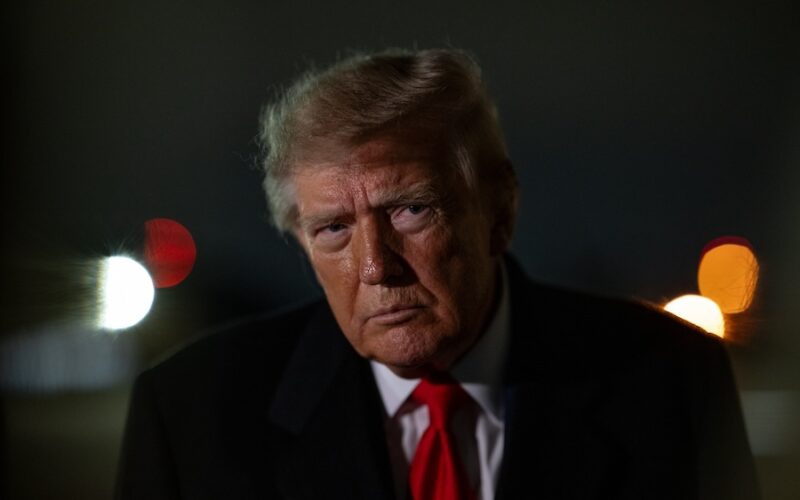
In a recent turn of events, former President Donald Trump revealed his private doubts about endorsing Texas Attorney General Ken Paxton instead of veteran Republican Senator John Cornyn. This decision became a topic of concern amidst the GOP’s disheartening midterm election outcomes.
Reports indicate that Trump second-guessed his support for Paxton after the latter’s defeat to Democrat James Talarico. This loss marked a significant shift, resulting in a Democratic hold on a Senate seat in Texas for the first time in decades and prompting discussions on the Republican Party’s campaign approach.
Sources close to Trump have shared that he expressed frustration about Paxton’s candidacy, questioning whether Cornyn might have been a stronger candidate for Republicans. Advisers had cautioned Trump for months, suggesting that backing Paxton could transform a dependable GOP seat into a costly electoral battle.
Concerns from Republican Leaders
Senate Majority Leader John Thune was particularly vocal, recommending Trump endorse Cornyn to provide Republicans a more secure chance of winning. This internal rift became evident during Texas’s primary, where neither candidate achieved an outright majority, necessitating a runoff.
After the initial primary, Trump reportedly reached out to Thune to discuss potential endorsements. During this dialogue, Rep. Wesley Hunt, who had finished third in the primary, expressed skepticism about Cornyn’s viability.
Thune warned that backing Paxton could potentially lead to a financial drain of $200 to $300 million for the Republican Party, which would impact competitive races in other areas. Despite such warnings, Trump believed that grassroots Republican voters were firmly behind Paxton.
A Shifting Endorsement Landscape
Interestingly, after several discussions, Thune left feeling hopeful that Trump would refrain from intervening in the race. An endorsement for Cornyn was even drafted but ultimately never made public.
Frustrated with Senate Republicans for not pushing his preferred voting legislation, Trump officially endorsed Paxton in May. This backing was seen as a win for the MAGA faction within the party, which had long criticized Cornyn’s alignment with the establishment.
Paxton’s victory in the Republican runoff, where he secured nearly 64 percent of the vote, set the stage for a general election fraught with controversies surrounding his past conduct and impeachment proceedings.
These issues proved critical during the election, culminating in Talarico’s victory over Paxton. Despite his private uncertainties, Trump defended his endorsement in a Fox News interview on Election Day, asserting, “I had no choice. Ken Paxton, he’s a good guy. And I just wasn’t a fan of Cornyn.”
This reflection adds a new layer to the Republican Party’s ongoing evaluation of its recent election struggles, prompting leaders to contemplate the impact of candidate selection and factionalism on their electoral performance.
