

President Trump is delivering a strong warning to Iran amid a growing U.S. military presence in the Middle East. This raises concerns about a potential escalation despite the president’s claims that an end to the conflict is near.
These developments occur just ahead of the November 3 midterm elections, highlighting a backdrop of intensified military readiness against a backdrop of uncertain diplomatic efforts.
Washington has made it abundantly clear that Tehran’s nuclear ambitions are intolerable. The administration has asserted that further military action is on the table if negotiations falter.
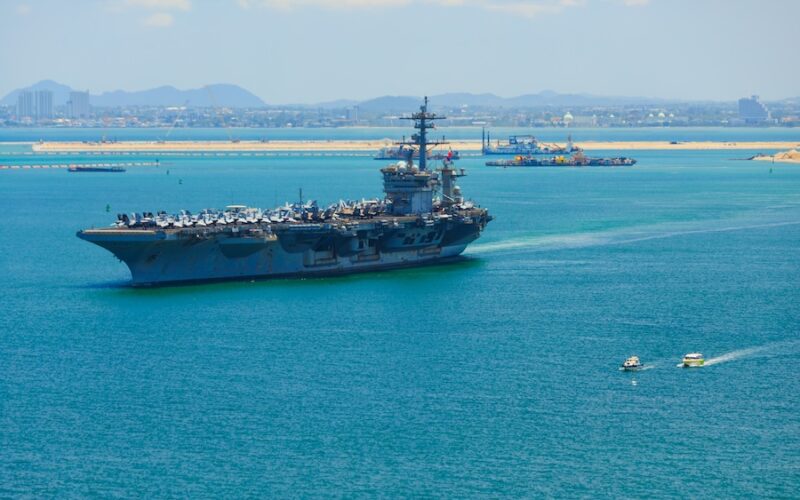
The deployment of a third U.S. aircraft carrier strike group exacerbates these concerns, indicating possible preparations for a significant escalation.
Approximately 9,000 military personnel, including the USS Theodore Roosevelt strike group and the USS Makin Island amphibious readiness group, are moving toward the Middle East. This deployment includes over 7,000 sailors and nearly 2,000 Marines.
If these forces overlap, the U.S. could have upwards of 20,000 sailors and Marines supported by numerous military aircraft in the region. Such a military display comes even as Trump hints at a different narrative about the conflict’s future.
In a recent radio interview, Trump suggested that the war might soon be concluded, stating, “It’s going to get wrapped up soon. We need a guarantee there’ll never be a nuclear weapon.” However, he did not clarify how this guarantee would be achieved or provide a timeline.
His comments have emerged amid warnings to Gulf nations to prepare for potential renewed military activities following the elections.
The administration is mulling over the idea of a swift yet intense military campaign aimed at Iranian targets, which could invite retaliation from Tehran. Concurrently, the U.S. has bolstered its defensive arrangements, notably enhancing Patriot missile defenses in Israel.
These preparations highlight the risks U.S. forces and regional allies may face if hostilities resume. Trump previously stated that no strikes against Iran would occur before the elections, but the door remains open for action afterward.
Moreover, Trump has acknowledged that extending military efforts post-elections is a possibility. Previous Iranian proposals aimed at easing tensions, including one concerning the Strait of Hormuz, have been dismissed by the U.S. as inadequate.
Currently, the White House appears to pursue dual objectives: increasing military pressure on Iran while also leaving the door open for negotiations. It remains uncertain whether the latest military deployments signal preparations for renewed attacks or a strategic maneuver to elicit concessions.
