


The U.S. military has unveiled dramatic footage showcasing American forces effectively dismantling key components of Iran’s naval fleet. This release provides a rare glimpse into the extensive operations taking place in the Persian Gulf and surrounding waters.
According to U.S. Central Command (CENTCOM), the strikes are part of broader efforts to weaken Tehran’s capacity to threaten vital international shipping lanes and destabilize the region. CENTCOM stated, “U.S. forces are degrading the Iranian regime’s ability to project power at sea and harass international shipping.”
The newly shared footage appears to depict numerous Iranian vessels being engaged and destroyed amidst the ongoing joint U.S.-Israel military initiative termed Operation Epic Fury, which has recently escalated. U.S. officials report that this maritime campaign has significantly hindered Iran’s naval capabilities.
CENTCOM has noted that since the operation’s commencement, over 30 Iranian naval vessels have been destroyed or sunk, including a variety of frigates, corvettes, and key platforms of the Islamic Revolutionary Guard Corps Navy. Notably, the IRIS Shahid Bagheri, a drone carrier, represents one of Tehran’s most critical losses.
WATCH:
This vessel was reportedly taken out during the early phases of the offensive, which has also targeted other pivotal naval assets owned by Iran. The IRIS Makran, a large support vessel for extended operations, sustained severe damage from American strikes. Additionally, multiple advanced Shahid Soleimani-class corvettes were destroyed as U.S. forces worked to incapacitate Iran’s operational effectiveness in regional waters.
American officials assert that Iranian naval operations across the Gulf of Oman, Arabian Gulf, and the Strait of Hormuz have been largely curtailed. Some assessments suggest that few, if any, operational vessels remain in crucial southern waters—a notable transformation for a nation that has invested decades into creating an asymmetric naval force to challenge U.S. interests.
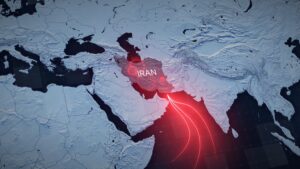
The operation extends not just to vessels but also to infrastructure tied to Iran’s maritime initiatives. U.S. strikes have targeted assets like naval mines and weapon depots, believed to support efforts to disrupt commercial shipping through the critical Strait of Hormuz.
This narrow corridor is vital for global energy transport, carrying about one-fifth of seaborne oil. Iran has repeatedly signaled its intention to disrupt traffic through this strait during high-tension periods, raising concerns among energy markets and Western governments about potential global supply disruptions.
Pentagon officials assert that the maritime offensive is crucial for ensuring uninterrupted navigation for commercial vessels. By targeting Iran’s fleet and the supporting infrastructure, U.S. commanders aim to maintain open shipping lanes in the region.
The naval strikes are part of the larger military campaign known as Operation Epic Fury. U.S. defense officials report that this operation has also significantly diminished Iran’s missile and drone capabilities.
Recent intelligence assessments suggest that Iran’s ballistic missile launch capacity has been reduced by nearly 90 percent, alongside the destruction of several facilities believed to be manufacturing unmanned aerial vehicles.
