

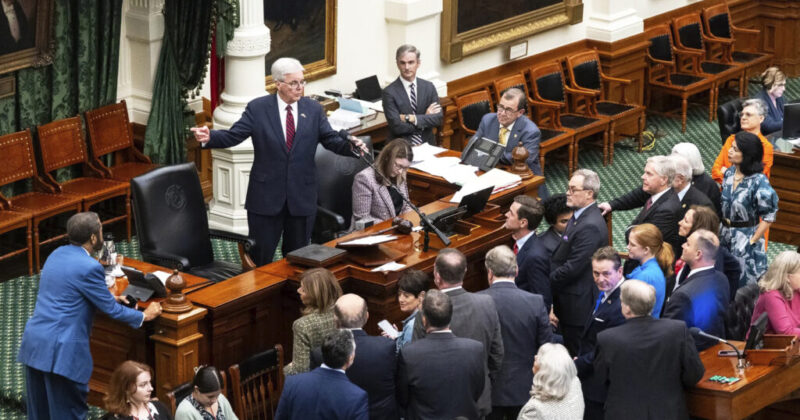
The Texas Senate approved a new congressional map in the early hours of Saturday morning, passing House Bill 4 on a party-line 18–11 vote after Republicans shut down a Democratic filibuster attempt.
Houston Democrat Sen. Carol Alvarado had planned to filibuster the bill, but Sen. Charles Perry invoked a Senate rule after pointing to a campaign fundraising email Alvarado sent during the debate. Perry argued the email violated ethics rules, which allowed Republicans to end debate and force a vote.
Abbott Celebrates “One Big Beautiful Map”
Gov. Greg Abbott quickly praised the outcome, calling it a win for Texas voters.
“The One Big Beautiful Map has passed the Senate and is on its way to my desk, where it will be swiftly signed into law. I promised we would get this done, and delivered on that promise,” Abbott said in a post on X.
Abbott argued the map “reflects Texans’ actual voting preferences” and thanked Lt. Gov. Dan Patrick for pushing it through the Senate.
How the Map Shifts Districts
Republicans currently hold 25 of Texas’ 38 congressional seats, but the new map creates five additional districts that would have voted for Donald Trump by at least 10 percentage points.
Key changes include:
-
North Texas: Rep. Marc Veasey’s district shifts fully into Dallas County; Rep. Julie Johnson’s district moves into more conservative East Texas; Rep. Jasmine Crockett’s Dallas seat becomes one of only two majority-Black districts statewide.
-
Central Texas: Rep. Greg Casar’s district loses Travis County; Rep. Lloyd Doggett’s district loses part of Williamson County.
-
Houston: Four Democrat-held districts are reshaped, most significantly Rep. Al Green’s, which moves from southern Harris County to the eastern part of the county.
Democrats argue the new boundaries will violate the Voting Rights Act, but legal experts note proving that in court may be difficult.
National Ramifications
Texas’ redistricting fight mirrors developments in California. Gov. Gavin Newsom signed legislation Thursday allowing Democrats to move forward with a partisan redistricting plan projected to add five Democratic-leaning House seats in the 2026 elections.
Republicans immediately filed a lawsuit and called for a federal investigation into California’s plan.
Currently, Democrats control 43 of California’s 52 U.S. House seats, while Republicans hold 25 of Texas’ 38.