
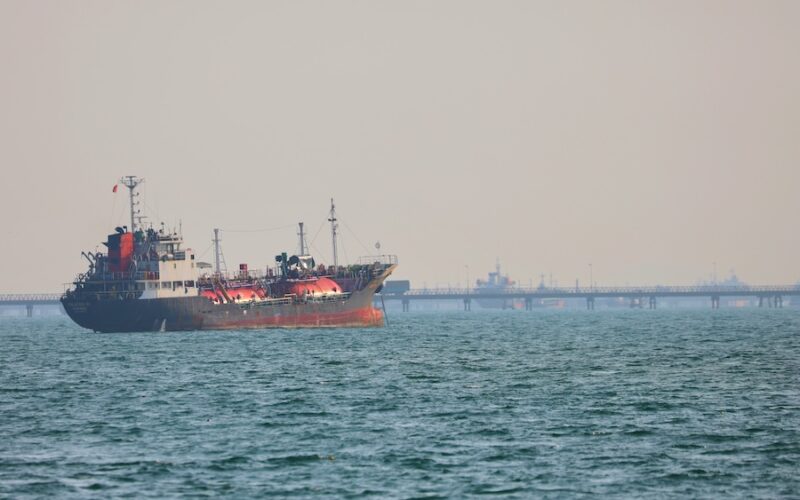
On Friday, Iran announced that a gas tanker was struck by a mine and exploded in the Strait of Hormuz, coinciding with President Trump’s stern warnings about the potential for military action against the regime.
According to Iranian state media, which cited the Islamic Revolutionary Guard Corps navy, the vessel was allegedly navigating an “unauthorized and dangerous route” at the time of the incident.
While this assertion emerged from Iranian authorities, Reuters indicated that independent verification of the explosion or its cause was not immediately available.
This latest claim comes after Trump expressed, in a Thursday interview with Hugh Hewitt, his readiness to employ military force to protect American allies and shipping interests from Iranian threats.
Trump noted that he could authorize more military strikes if the situation worsened, emphasizing that military action remains a viable option.
He also warned of serious repercussions should Iran attempt to assassinate an American official.
This warning follows reports that Treasury Secretary Scott Bessent had moved to a military base due to threats to his safety, though a Treasury spokesperson affirmed that these threats would not derail the administration’s economic strategy against Iran.
Trump has stated that he would view it as a failure if Iran’s current leadership continues beyond his presidency.
The president claimed that the U.S. naval blockade is weakening the Iranian regime and asserted that Washington effectively controls the Strait of Hormuz. His comments come amid ongoing attacks on commercial shipping within the waterway.
Friday’s reported explosion would mark the fifth tanker incident claimed by Iranian officials in just two days.
Additionally, Iranian media reported that four oil tankers were previously struck by explosions, allegedly after breaching restricted areas.
The existing threat persists even after the most intense conflict between the U.S. and Israel against Iran that began in late February.
Data from the Washington Institute for Near East Policy, as cited by Reuters, revealed that at least 10 vessels were targeted during the initial days of November. October alone saw 37 attacks, the highest monthly toll since the onset of the conflict.
A report from the Joint Maritime Information Center documented four attacks in the strait within roughly 52 hours earlier this month.
The center has assessed the threat level in the strait as severe, warning of ongoing harassment and pressure on shipping routes from the Revolutionary Guard, among other concerns.
Washington has upheld its blockade of Iranian ports, aiming to limit the regime’s revenue streams.
On Thursday, Trump indicated that pursuing a negotiated settlement with Tehran was no longer a priority, emphasizing that the U.S. does not require a deal. He instructed Vice President JD Vance to focus on investigating alleged electoral fraud in Democratic-led areas.
Secretary of State Marco Rubio has called Iranian demands, such as war reparation payments, unacceptable, according to reports.
Regional allies are striving to prevent further escalations. Following discussions with Qatar’s prime minister, Trump noted that the military campaign seems effectively concluded for the time being, with Gulf partners preferring to maintain the current stability.
Despite this, Trump’s warnings suggest that additional military action remains on the table as tensions in the maritime domain continue.
