

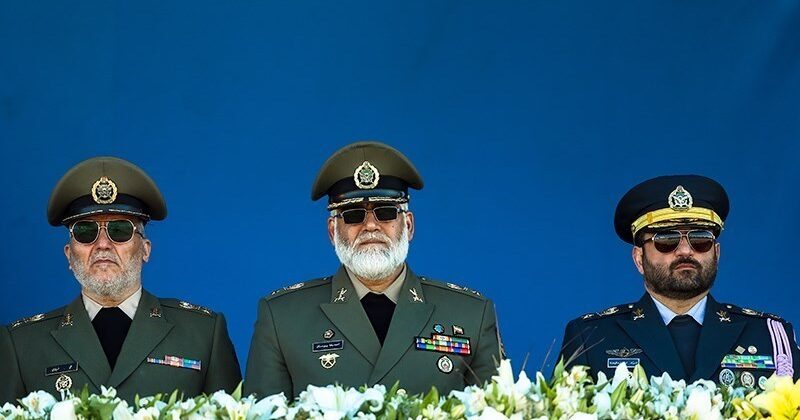
Israeli airstrikes in Tehran have reportedly resulted in the deaths of key Iranian officials, including Ali Larijani, who was a significant player following Ayatollah Khamenei’s passing. His position as secretary of the Supreme National Security Council placed him at the center of Iran’s command structure.
During the attacks, which targeted various Iranian security elements, Larijani was killed alongside Gholamreza Soleimani, the commander of the Basij forces. Israeli Defense Minister Israel Katz remarked on the significance of this operation, suggesting that these actions removed notable figures from power.
The strikes form part of a broader Israeli campaign against the Basij and Islamic Revolutionary Guard Corps (IRGC). Reports indicate that around 300 Basij officers were also killed during these operations, which affected command and logistical facilities across Tehran.
Notably, Iranian officials have not confirmed the deaths of Larijani or Soleimani at this time.
According to a source who spoke to CNN, Ali Larijani, the Secretary of the Iranian Supreme National Security Council who was reportedly killed earlier today in a strike by Israel, was seen by both Israel and the United States as the most favored transitional candidate as of… pic.twitter.com/ywDMIG908u
— OSINTdefender (@sentdefender) March 17, 2026
Interestingly, sources suggest that Tehran residents provided essential intelligence that aided in these targeted strikes. An unnamed Israeli official indicated that this collaboration proved invaluable for identifying Larijani’s location.
The same official noted that Larijani’s visibility in public events led to his identification. His recent engagements with the media further exposed him, ultimately culminating in his targeting.
Continued intelligence support from local sources is reportedly enhancing Israeli operations against the Basij and IRGC. This has resulted in more precise guidance for strikes.
In related news, exiled Iranian figure Reza Pahlavi has emphasized the impact of these developments. He referred to the strikes as a significant blow to the Revolutionary Guard’s oppressive regime.
Pahlavi also mentioned a burgeoning network of Iranian dissidents known as the “Immortal Guard,” which he believes possesses the capability to orchestrate further internal actions against the regime.
