

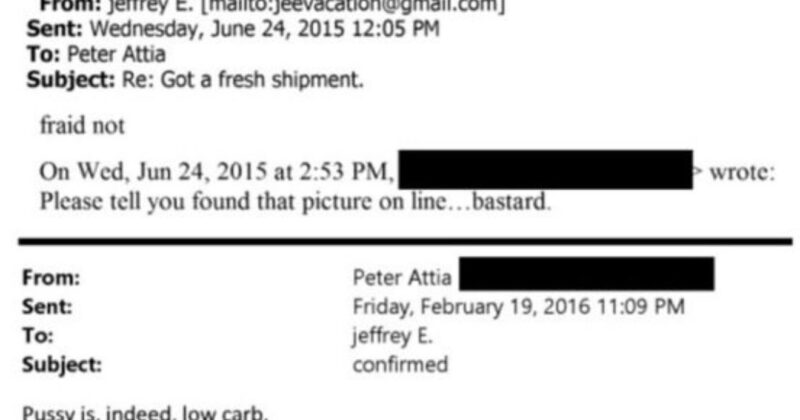
Peter Attia has left his role as a CBS News contributor after the Justice Department released records showing extensive communications between him and Jeffrey Epstein.
What the records revealed
CBS announced Attia’s hiring on January 28 as part of an editorial overhaul overseen by editor in chief Bari Weiss.
The Department of Justice published a vast archive on January 30 under the Epstein Files Transparency Act that included emails and other correspondence.
Attia’s name appeared more than 1,700 times and exchanges dated from 2014 to 2019 were among the materials released.
Some messages were professional in tone while others were informal and at times crude, including a line in which Attia wrote that something “is, indeed, low carb.”
There is no indication in the documents that Attia participated in or knew about Epstein’s criminal activity, and he has not been accused of wrongdoing.
Still, the frequency and tenor of the communications raised criticism given Epstein’s status as a convicted child sex offender during much of the correspondence.
As scrutiny grew, Attia posted on X and called portions of the exchanges “embarrassing, tasteless, and indefensible” while denying any connection to Epstein’s crimes.
He stated that he never traveled on Epstein’s plane, visited his private island, or witnessed illegal activity, and he said he first met Epstein in 2014 in the context of health research and philanthropic introductions.
Attia also said he had been “naïve” in assessing Epstein’s standing and regretted maintaining contact.
CBS removed a planned rebroadcast of a “60 Minutes” segment featuring Attia and executives weighed the reputational and commercial risks of keeping him on staff.
By February 23, major outlets reported that Attia had left the network amid the fallout from the document release.
His resignation is one of several consequences faced by business leaders and academics named in the files who stepped back from roles even without allegations of criminal conduct.
The episode has raised questions about the judgment and vetting practices of media elites and the reputational risks they face when names surface in widely released government documents.
