

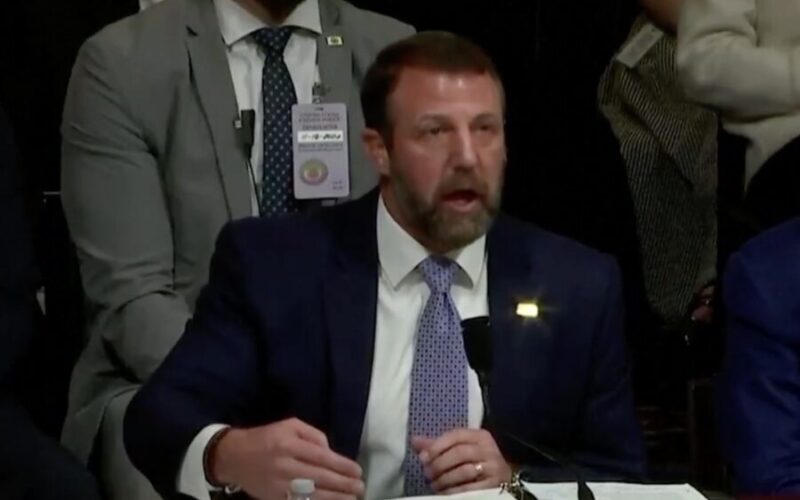
In a recent hearing, Homeland Security Secretary Markwayne Mullin emphasized the swift actions taken during the nationwide ground stop on Friday. He noted that air traffic controllers managed to safely land all planes and resume flights within hours.
The issues erupted around 3:30 p.m. Eastern, when outdated equipment on the FAA’s communication network became overwhelmed by a surge of data. This disruption affected 17 of the FAA’s 22 en route air traffic control centers and extended to several facilities that guide air traffic.
Despite the crisis, certain radio frequencies and radar feeds allowed effective communication between controllers and pilots, ensuring every aircraft landed safely. Air traffic operations resumed by 8:15 p.m. Eastern, although airlines faced a sizable backlog, resulting in approximately 12,462 flight cancellations that day, with 9,082 attributed to larger airlines. The FAA clarified that not all cancellations were linked to the ground stop.
The FAA identified two potential sources for the surge: a radar site in Amarillo, Texas, and a communications site in El Dorado, Arkansas, where a contractor had made equipment updates. The network began stabilizing once the contractor addressed both sites.
Transportation Secretary Sean Duffy indicated that while investigators had retraced the events in El Dorado, the exact cause of the disruption remains undetermined. He mentioned that 68 prior router installations had occurred without issues, prompting the FAA to halt any further installations during the investigation process.
During the hearing, Rep. Bennie Thompson questioned Mullin regarding a personal trip he took using a government plane while many travelers were still dealing with cancellations. Mullin clarified that he financed the trip himself and left nearly 24 hours after air traffic was restored. He expressed concern that canceling the trip could imply a hesitation to fly himself.
NEW: DHS Secretary Markwayne Mullin is pushing back on criticism after flying his family to an LSU game less than a day after a massive nationwide ground stop snarled air travel.
Mullin argues that staying grounded would have fueled public distrust in aviation safety—especially with 36,000 other flights operating safely that day—and notes he reimburses taxpayers for personal travel on his required government jet.
— FOX & Friends (@foxandfriends) November 18, 2026
Additionally, the FAA reported no signs of a cyberattack underlying the outages. When questioned about a potential trend in tech failures, Mullin assured lawmakers that his department had found no indications linking the events together.
