
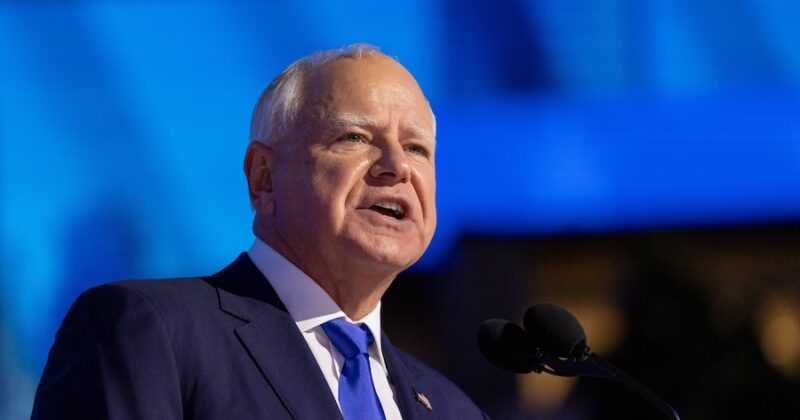
Republican members of the Minnesota House introduced articles of impeachment accusing Governor Tim Walz of corrupt conduct related to fraud in state programs.
The resolution also includes a companion measure aimed at Attorney General Keith Ellison and was filed during the 2026 legislative session.
Rep. Mike Wiener, who circulated draft articles in January, is listed among the authors and said at the time that at least ten Minnesota Republicans had signed on.
Constitutional Basis and Immediate Effect
The resolution cites Article VIII, Section 1 of the Minnesota Constitution to frame the House’s power of impeachment and the Senate’s role in trial.
It would bar Walz from exercising gubernatorial duties if adopted by the House until a Senate trial and possible acquittal restored his powers.
Specific Articles of Impeachment
The package contains four articles that allege concealment and tolerance of widespread fraud in state-administered programs.
Article I asserts Walz knowingly concealed or permitted concealment of substantial fraud despite warnings, audits, and briefings indicating losses of taxpayer funds.
Article II alleges he interfered with oversight and failed to ensure agency cooperation with audits while resisting legislative scrutiny and delaying disciplinary action.
Article III contends that Walz put politics ahead of lawful administration by prioritizing narratives over disclosure and failing to protect taxpayer money.
The final article charges a failure to faithfully execute laws governing stewardship of public funds and permitting violations despite awareness of them.
All four articles end with the statement: “Wherefore, Timothy J. Walz warrants impeachment for corrupt conduct.”
Scope of Allegations and Investigations
The impeachment centers on management of fraud in nutrition assistance, Medicaid services related to housing and autism therapy, and other social services.
Federal prosecutors and state investigators have pursued schemes such as the Feeding Our Future case amid estimates of roughly $9 billion in losses since 2018.
Administration Response and Political Reality
The Walz administration has pointed to steps including a Financial Crimes and Fraud Section in the Bureau of Criminal Apprehension, a statewide Director of Program Integrity, and executive orders on antifraud measures.
Despite the Republican-led filing, successful impeachment is unlikely because the Minnesota House is evenly divided and would need full GOP unity plus at least one Democrat to proceed.
The Senate, where Democrats hold a one-seat majority, would require a two-thirds vote for conviction and removal.
Walz previously announced in January that he would not seek a third term after earlier indicating he planned to run and citing political pressure from the fraud scandal among reasons for stepping aside.
He said he would focus on governing and defending Minnesota against criminals rather than on a campaign, framing his withdrawal as a choice to prioritize the state’s work.
The impeachment drive keeps pressure on Walz and highlights Republican calls for accountability even if removal remains unlikely.
