

A cleric in Michigan recently extolled the ‘martyrdom’ of Iran’s Ayatollah Ali Khamenei, just a day after U.S. and Israeli forces killed him in a significant operation.
Hassan Salamey, a Shiite Muslim cleric, made these comments at a March 1 gathering in Dearborn, where he praised Khamenei, known for his leadership of a nation recognized as a major supporter of terrorism.
“Today, we come together to honor the martyrdom of our great leader, Sayyid Ali Hussein Khamenei,” Salamey proclaimed at the event held at the Hadi Institute.
This event occurred shortly after coordinated military actions by the U.S. and Israel resulted in Khamenei’s death and that of other Iranian officials.
Footage from the memorial, shared by the Middle East Media Research Institute, showed Salamey addressing attendees beside a large image of Khamenei.
However, Salamey’s speech extended beyond mourning. He criticized the United States, labeling it a creation of ‘devil-worshipers’ on ‘stolen land’ and accused ‘devil-worshiping Freemasons’ of controlling it.
He suggested that while people might attribute the strikes to “Zionist Jews,” the real orchestrators were linked to a deeper malevolent force.
Outrageous Claims and Attacks
Salamey delved into Islamic lore, referencing Iblis, perceived as the Islamic equivalent of Satan.
“Iblis manipulates those at the forefront, guiding their ideologies and actions,” he asserted, claiming American politics was marred by elite control.
Salamey maintained that regardless of the political parties in power, the U.S. remains under the influence of a select few.
Another speaker, Usama Abdulghani, echoed sentiments of admiration for Khamenei, declaring his death as the product of a lifetime dedicated to struggle.
Abdulghani referred to Khamenei’s demise as achieving the ‘ultimate honor’ after decades of committed resistance.
Dearborn’s Changing Landscape
Diverse voices in the community emphasized the importance of passing down a culture that venerates their martyrs. Abdulghani encouraged families to instill these values in the next generation.
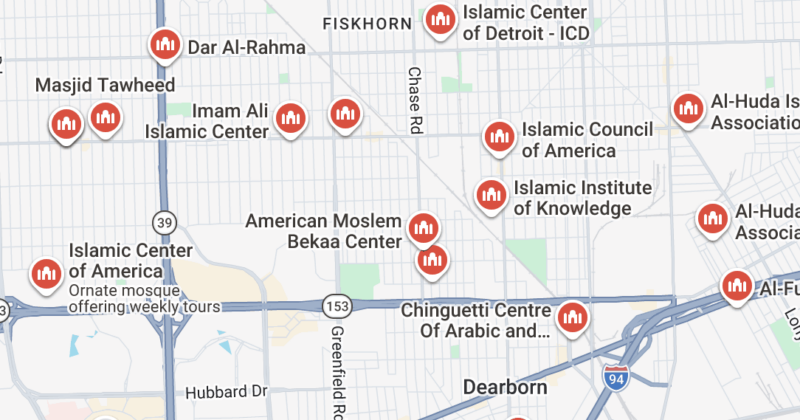
With a significant portion of Dearborn’s 110,000 residents having Middle Eastern or North African ancestry, the city’s demographics have shifted dramatically over the years.
While the early Arab immigrants included many Christians, subsequent migrations were largely influenced by the chaos of regional conflicts, leading to more Muslim settlers. Longtime residents now find their hometown transformed, facing the realities of a changed cultural landscape.
