

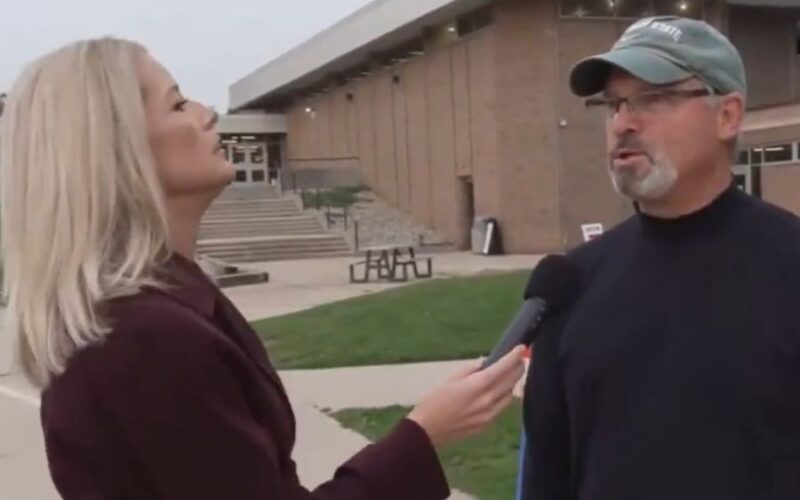
On Election Day, two voters from Michigan left CNN correspondent Sunlen Serfaty in awe. They declared their switch from the Democratic Senate nominee, Abdul El-Sayed, to support Republican Mike Rogers, citing concerns over antisemitism and hostility in politics.
During an encounter outside a White Lake polling place, Serfaty learned that some Democrats were willing to cross party lines in a pivotal Senate race. One voter, Deborah, explained her lack of confidence in El-Sayed due to his positions and perceived disregard for Michigan’s Jewish community.
“I voted for Mike Rogers; I don’t feel like Abdul is ready to be in the Senate,” Deborah shared. Her switch from former Democratic Rep. Haley Stevens, whom she supported in the primary, marks a notable shift.
Serfaty described this change as a bold message to the Democratic Party. “Emm hmm, Yeah,” responded Deborah, affirming her choice.
Another voter, Manny, shared that he had never before voted for a Republican until this election.
CNN reporter Sunlen Serfaty finds it easy to find party-switchers in Michigan today. “Manny” said he’s never voted for a Republican until today. Why not back Abdul? “Because I’m against hate.”
Then the “centrist Republican” voted for Hasan Piker’s candidate. https://t.co/yKe0Cup8JC
— Tim Graham (@TimJGraham) November 3, 2026
After entering the voting booth, he chose to support Rogers, highlighting the emotional significance of his vote. “Draw your own conclusions,” Manny told Serfaty when asked about the vote’s impact.
When pressed about why he turned against El-Sayed, Manny simply stated, “Because I’m against hate.” These interviews underscored the growing rifts within the Democratic ranks, especially concerning El-Sayed’s views on Israel and affiliations with contentious political figures.
The fallout from these elections came swiftly, especially following Stevens’ surprising endorsement of Rogers after initially promising to back El-Sayed. Stevens had lost the primary but began to express her discontent over a politically charged advertisement criticizing financial aid to Israel.
Following this, tensions escalated when she condemned El-Sayed for failing to point out Iran as a major threat in discussions on Middle Eastern security. This dispute spiraled as Stevens withdrew her support altogether after being snubbed by El-Sayed’s campaign.
“We can’t stand with hate,” Stevens emphasized during a press conference alongside Rogers.
The immediate backlash against her decision included severe criticism from influential Democrats, including strategist James Carville, who accused her of abandoning the party’s principles for personal gain.
President Donald Trump celebrated her endorsement, calling it a display of bravery in supporting Rogers. This political shift has sparked significant repercussions, including the resignation of Stevens’ chief of staff.
Despite El-Sayed’s attempts to minimize the controversy, it’s clear that issues of antisemitism and economic pressures permeate voter concerns, as seen in the interviews with Deborah and Manny. The stakes are high in this Senate race, as the seat vacates due to retiring Democratic Sen. Gary Peters.
Rogers aims to secure this seat, while El-Sayed strives to maintain Democratic control amidst increasing internal divisions surrounding Israel and the influence of progressive activists. While two voters’ perspectives don’t represent a statewide trend, they provide a glimpse into the shifting political landscape in Michigan.
