

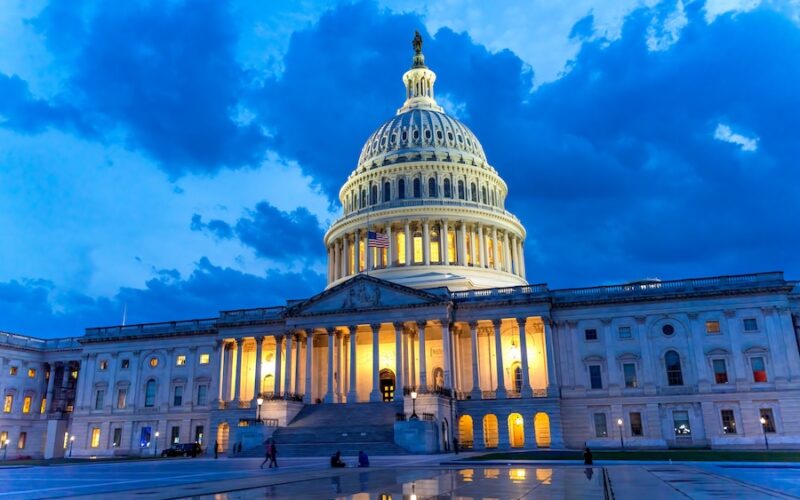
The recent midterm elections have paved the way for Democrats to reclaim the U.S. House of Representatives. This outcome brings a notable challenge for President Donald Trump and his GOP allies.
As of Tuesday evening, Democrats have successfully captured a House majority, ending Republican dominance of the chamber. This sets the stage for a divided Congress during the concluding years of Trump’s second term.
This shift is considerable, especially since Republicans entered Election Day holding a slim margin. To flip the chamber, Democrats required a gain of only three seats, which they achieved.
With this change, Democrats are in a prime position to regain leadership roles and direct powerful congressional committees once the new Congress begins in January.
This newly gained power poses risks for Trump’s legislative plans. House Democrats will likely obstruct Republican initiatives and may pursue investigations into Trump’s administration.
Since January 2023, Republicans held the House majority but faced challenges during this election cycle. Despite intense competition across various districts, they aimed to maintain their influence through 2024.
Democrats strategically targeted Republican-controlled districts, especially in suburbs and closely contested areas, where voter loyalties have shifted historically.
Economic issues, cost of living concerns, and dissatisfaction with the country’s direction under Trump were key focal points for their campaign.
On the other hand, Republicans emphasized their dedication to border security, immigration laws, tax reforms, and championing Trump’s policies.
As the House election unfolded, it took place alongside critical Senate and gubernatorial races, with both parties heavily investing in ads and mobilizing voters.
This shift represents a crucial moment for House Minority Leader Hakeem Jeffries, who has dedicated years to rebuilding Democratic power since losing the chamber to Republicans in the 2022 elections.
Jeffries now seeks the speakership and could potentially make history as the first Black Speaker of the House if elected.
Current House Speaker Mike Johnson, an ally of Trump, is now facing the reality of relinquishing his role as Republicans prepare to transition into the minority.
With a Democratic House, new authority over legislation, federal spending discussions, and committee investigations comes into play. This could present additional hurdles for the White House regarding immigration, government funding, and overall domestic goals.
Democrats may also pursue inquiries involving officials from the Trump administration, various federal agencies, and Trump’s business dealings.
However, wielding control of the House doesn’t guarantee the passage of legislation; it requires cooperation with the Senate and the president.
The Senate balance of power remains under scrutiny, as a number of closely watched races could determine whether Republicans maintain their hold on the upper chamber.
The prediction of a Democratic-controlled House follows months of polling suggesting potential gains for the party.
Ultimately, the final composition of the House will rely on the results of outstanding races and the continued counting of ballots nationwide.
