

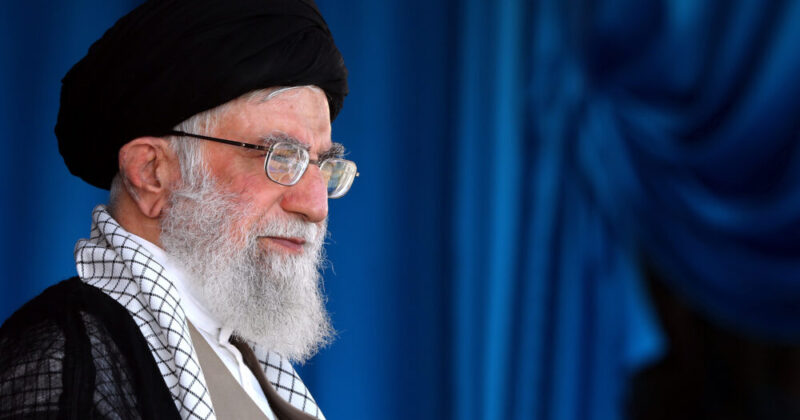
The Washington Post drew fierce criticism for describing Iran’s slain supreme leader in unexpectedly sympathetic terms.
“With his bushy white beard and easy smile, Ayatollah Khamenei cut a more avuncular figure in public than his perpetually scowling but much more revered mentor, and he was known to be fond of Persian poetry and classic Western novels, especially Victor Hugo’s ‘Les Misérables.’ But like the uncompromising Khomeini, he opposed moderates’ efforts to promote political and social reforms domestically and to secure rapprochement with the United States,” the Post wrote.
Ayatollah Ali Khamenei was killed Saturday in a sweeping Israeli strike on Tehran.
He was eliminated alongside other senior regime figures during “Operation Epic Fury,” a coordinated U.S.-Israeli military assault that rocked the Iranian capital.
While the obituary acknowledged his consolidation of power and responsibility for thousands of deaths, critics seized on the warm-toned opening as tone-deaf.
Sen. Ted Cruz posted on X that “this is sick.”
Jennifer Sey, founder of XX-XY Athletics, blasted the framing as “peak TDS.”
Actor James Woods reposted the description and wrote, “This is not satire.”
The backlash quickly spread to The New York Times, which also characterized Khamenei as “avuncular” while noting his literary interests and contrasting him with Ayatollah Ruhollah Khomeini.
Critics argued legacy media outlets are too quick to humanize hostile foreign leaders.
The controversy revived memories of 2019, when the Post described ISIS chief Abu Bakr al-Baghdadi as an “austere religious scholar” after his death during President Donald Trump’s first term.
Some commentators said the language surrounding Khamenei felt like a replay of that earlier controversy.
Officials told Fox News that Israel is targeting Iranian leadership figures while U.S. forces are striking military facilities and ballistic missile sites considered an “imminent threat.”
The military campaign against Iran is expected to continue for days.
Trump warned Sunday that Tehran would face overwhelming consequences for any retaliation and said if Iran were to “hit very hard,” they would be met with “a force that has never been seen before.”
