

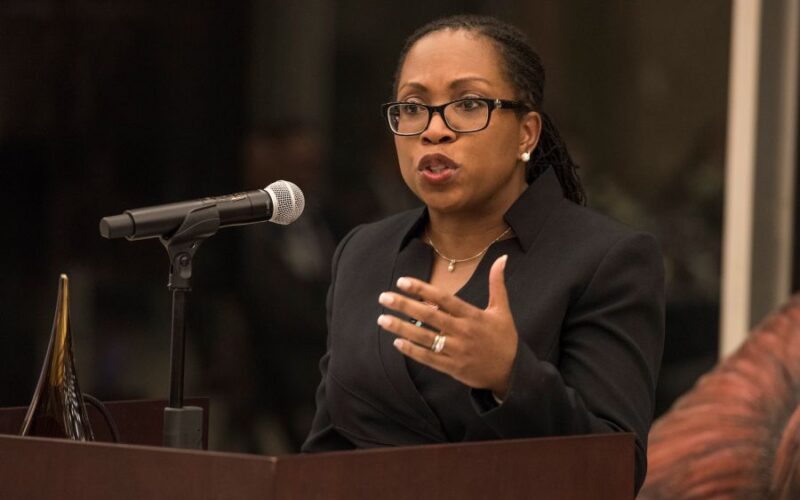
The Supreme Court’s recent order requires lower courts to take another look at voting rights cases in light of its decision regarding Louisiana’s congressional maps. Justice Ketanji Brown Jackson voiced strong objections to this development.
The cases from Mississippi and North Dakota were sent back for reconsideration, following the ruling in Louisiana v. Callais. This decision has refined how courts will assess particular claims under the Voting Rights Act concerning redistricting.
Jackson’s dissent emphasized that the justices should have taken bolder action rather than remanding the cases for further review. One case from North Dakota questions whether individuals and advocacy groups have the right to bring lawsuits under Section 2 of the Voting Rights Act.
Previously, an appeals court decided that only the federal government could initiate such claims, raising alarms among voting rights advocates and tribal representatives challenging the current maps.
In Mississippi, the case pertains to accusations that the congressional districts weaken Black voting power.
The Supreme Court did not provide a detailed opinion but instructed lower courts to reconsider the cases using the standards set in the Louisiana decision.
Last month’s Louisiana ruling, which passed with a 6-3 vote, determined that the congressional map’s second majority-Black district constituted an unconstitutional racial gerrymander. Justice Samuel Alito articulated for the conservative majority that race should not play a predominant role in creating congressional districts merely to comply with Section 2 of the Voting Rights Act.
Jackson’s vocal stance on redistricting issues highlights her position as a key liberal figure in these discussions. This ruling is anticipated to spark renewed redistricting battles in various Southern states as Republicans seek to reshape congressional districts in preparation for the upcoming 2026 midterm elections.
