

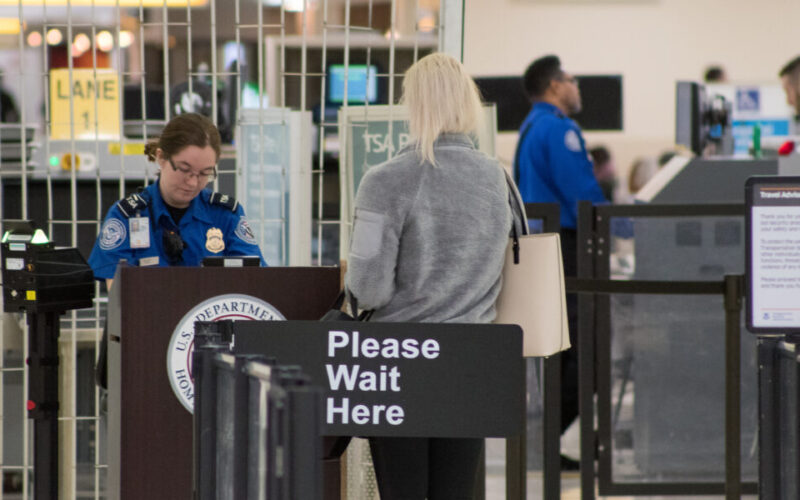
The Transportation Security Administration (TSA) is currently grappling with the longest wait times ever recorded in the U.S. This situation has escalated as the Democrat-led shutdown of the Department of Homeland Security (DHS) continues into its 40th day.
As of March 25, this shutdown ranks as the second longest in U.S. history when considering both full and partial shutdowns, only behind last year’s government shutdown led by the Democrats.
The dispute centers around funding appropriations for various DHS agencies, including the TSA. Senate Democrats have obstructed multiple efforts to advance complete funding proposals for the department, which would also cover U.S. Immigration and Customs Enforcement (ICE) and Customs and Border Protection operations.
Attempts to terminate the shutdown have failed at least five times in the Senate, lacking the necessary 60 votes for cloture. Democrats have linked their support for full DHS funding to reforms on ICE and CBP, demanding measures like body-worn cameras and judicial warrants, which Republicans firmly oppose.
While some dialogue has opened regarding certain demands, Republicans remain steadfast against proposals that would fundamentally alter deportation policies.
TSA officers, classified as essential personnel, have continued to work without pay during this shutdown, leading to increased rates of absenteeism and resignations. According to DHS reports, over 450 TSA officers have left their positions since mid-February, following a departure of more than 1,100 during the 2025 shutdown.
Call-out rates have soared to between 10 and 40 percent on various days, with localized peaks exceeding 50 percent, particularly at airports like Houston Hobby.
Due to this crisis, security checkpoints have temporarily closed at numerous locations, resulting in significant wait time increases at major airports, including Atlanta, Houston, and New York-area facilities. Travelers have reported delays stretching three to four hours during peak times.
When you arrive at Terminal E at Bush Intercontinental Airport (IAH) in Houston, the line outside looks fairly manageable. But in reality, it starts in the basement, goes up a floor and zigzags through baggage check, then runs outside before snaking around the check in counters. pic.twitter.com/uv26Rmtngm
— amanda moore 🐢 (@noturtlesoup17) March 24, 2026
On Monday, the Trump Administration dispatched hundreds of ICE agents to assist at more than a dozen major airports, including those in New York, Atlanta, Houston, Chicago, and Philadelphia. These agents were primarily tasked with managing passenger flow and supporting TSA operations in roles that do not require specific TSA certification.
DHS officials indicated that these deployments aimed to alleviate understaffed checkpoints and decrease delays. However, TSA union representatives and aviation security experts have noted that ICE personnel lack the specialized training necessary for TSA roles, limiting their effectiveness.
Despite some minor reductions in wait times during off-peak periods, significant delays have persisted, with record averages reported at various airports. Absence rates and checkpoint closures will continue to fluctuate based on daily staffing.
NYC man reacts to ICE at the airport: “They’re good. They’re here to help. They’re not botherin nobody. As long as they can check my bagz n get me on my flight, I’m good to go. I wanna get to the Bahamas. I want outta here.”
This is so Brooklyn lol. pic.twitter.com/62qHf5wGb8
— johnny maga (@johnnymaga) March 24, 2026
If the funding deadlock remains unresolved, further reductions in TSA staffing may lead to increased checkpoint closures or operational interruptions at many airports. DHS and TSA officials have cautioned that sustained high absence rates could pose security risks, potentially requiring a reduction in screening procedures or temporary halts in passenger processing at specific locations to ensure safety standards are upheld.
