

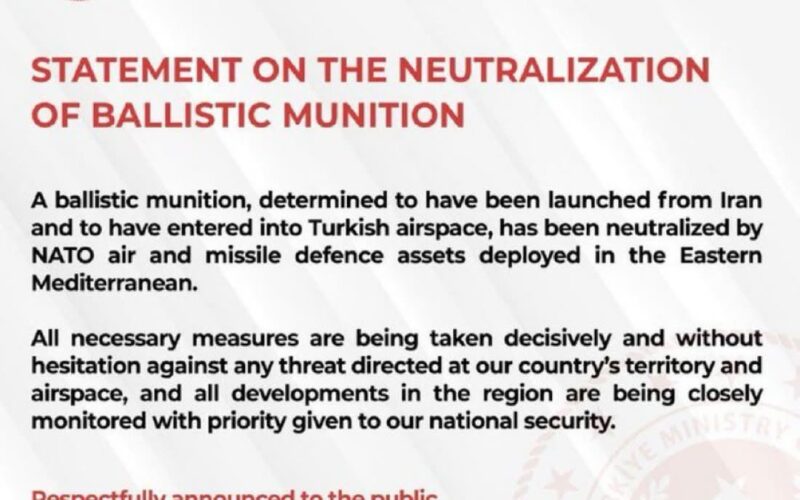
The ongoing tensions involving Iran, the U.S., and Israel are now encroaching upon NATO territory as the alliance’s defenses intercepted another Iranian missile entering Turkish airspace. This incident marks a serious escalation in a volatile region.
NATO officials confirmed the successful interception of the missile, averting any potential threat. Turkish authorities further noted this as the fourth time an Iranian missile had been neutralized since the spike in hostility, highlighting a troubling trend.
The pattern of incursions is alarming NATO and its member countries, particularly Turkey. Although there have been no reported casualties or damage, the implications of missiles crossing into NATO airspace are significant and may complicate the alliance’s stance.
While NATO has not yet indicated plans to invoke Article 5, which ensures collective defense, officials are closely monitoring the situation. They stand ready to protect member states if required.
What initially began as a conflict involving Iran, Israel, and U.S. military operations in the Middle East is now impacting Turkey’s airspace. This shift signals a worrying escalation, even if both sides refrain from openly confronting NATO forces.
Turkey faces a unique challenge as a NATO member. It benefits from the alliance’s military protection while trying to maintain dialogue with Tehran, all while disapproving of U.S.-Israeli actions. This delicate balance grows increasingly complicated as missile threats loom.
Strategic military sites in Turkey, such as Incirlik Air Base and the Kurecik Radar Station, are critical to NATO’s defense strategy. While recent interceptions weren’t necessarily targeting these locations, the prospect of an attack significantly elevates the stakes.
Iran has not officially acknowledged any intent to strike Turkey during these incidents. In previous statements, Iranian officials claimed their missiles were aimed elsewhere and might have entered Turkish airspace by accident. However, continued “accidental” incursions are likely testing NATO’s patience.
The broader strategic landscape enhances the seriousness of these developments. Iran has been engaging in missile and drone strikes against U.S. positions in the region, while warnings from Washington suggest that further escalation could invite a far more robust military response.
The potential for an errant missile to strike populated areas or trigger miscalculations is a serious concern. Most crucially, a direct hit on a NATO-affiliated facility could potentially compel the alliance to act decisively.
Currently, NATO’s air defense systems are effectively intercepting threats, preventing immediate harm. However, the rising frequency of these incidents indicates that this situation may soon extend beyond containment.
RELATED: NEW: Trump Unveils Jaw-Dropping Proposal For Strait Of Hormuz: ‘Me And The Ayatollah!’
