

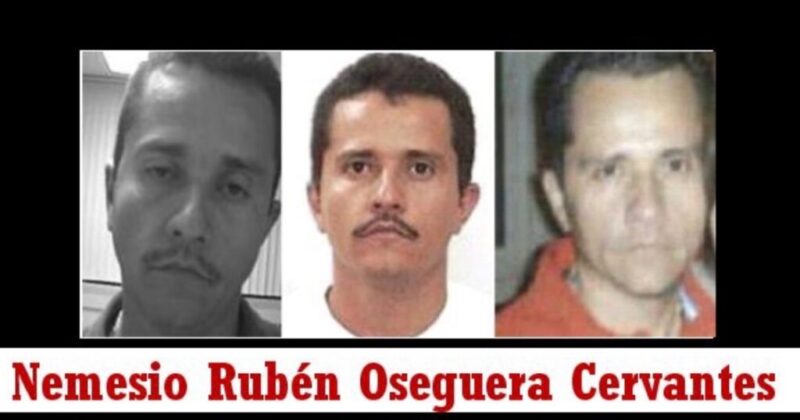
Mexican military forces killed Nemesio Rubén Oseguera Cervantes, known as “El Mencho,” during an operation in Tapalpa, Jalisco, carried out in conjunction with U.S. forces.
The action was led by the Mexican army with support from intelligence units and possibly the National Guard.
The Secretariat of National Defense (Sedena) said Oseguera Cervantes was wounded in a confrontation and died during aerial transport to Mexico City for medical treatment.
Specialized forces and aircraft took part in the operation and several cartel associates were reported killed at the scene or en route.
At least three Mexican troops were killed in the raid as well.
The killing immediately triggered widespread unrest across multiple states under CJNG influence.
Cartel members responded with roadblocks using burning vehicles and other disruptive actions, including fires set to buses, buildings, and private property.
These incidents affected Jalisco, including areas near Guadalajara’s international airport and Puerto Vallarta, and extended to Michoacán, Colima, Guanajuato, Guerrero, Aguascalientes, Nayarit, Zacatecas, and Tamaulipas.
Local authorities in Jalisco activated emergency protocols, including a “Code Red” alert, suspended public transportation in some zones, and urged residents to stay home.
The U.S. Embassy issued shelter-in-place advisories for American citizens in affected regions and some airlines paused flights.
Such retaliatory measures are a documented pattern in cartel responses to major leadership losses, according to a report from the Associated Press.
Background and Cartel Threat
Nemesio Rubén Oseguera Cervantes was born July 17, 1966, in Aguililla, Michoacán, and was 59 at the time of his death.
He had a prior career as a police officer before entering organized crime in the 1990s with the Milenio Cartel.
He co-founded the Jalisco New Generation Cartel (CJNG) around 2010 after splits in predecessor groups.
The CJNG built a dominant presence in Jalisco and expanded nationwide and internationally with operations centered on methamphetamine and fentanyl production and trafficking, plus extortion, fuel theft, and money laundering.
U.S. authorities indicted Oseguera Cervantes multiple times for drug conspiracy and offered a reward of up to $15 million for his capture, citing the cartel’s role in supplying large volumes of fentanyl to the United States.
The CJNG has a well-documented reputation for extreme violence, using ambushes, improvised explosive devices, armored vehicles, and brazen public displays of force that have driven high homicide rates in states such as Jalisco, Michoacán, and Guanajuato.
The death of Oseguera Cervantes represents one of the most significant blows to Mexican organized crime in recent years and a victory for law-and-order efforts aimed at protecting communities at home and abroad.
