

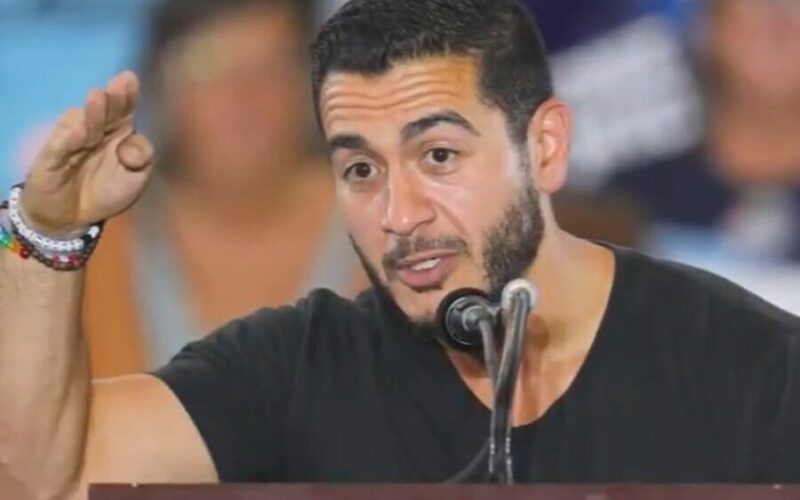
Michigan’s Democratic candidate for the Senate, Abdul El-Sayed, is striving to rally his party just before the midterm elections. Criticism surrounding a contentious pro-Palestinian advertisement and allegations of antisemitism could hinder his campaign against Republican Mike Rogers.
This Sunday, El-Sayed plans to appear at a Detroit church alongside former rival Rep. Haley Stevens and South Carolina Rep. Jim Clyburn in a crucial attempt to bolster Democratic support.
This marks their first joint campaign appearance since August, even though Stevens had previously vowed to support El-Sayed post-primary.
However, this push for Democratic solidarity follows a tumultuous week, illustrating the deep fractures that remain. On Wednesday, Stevens’ fiancé decried El-Sayed, endorsing Rogers and dealing a damaging blow.
Stevens quickly took to CNN to voice her support for El-Sayed while emphasizing that he must take more decisive actions to address party discord.
She urged him to “shut out the hate and call it out,” stressing the need to reconnect with voters who previously supported her.
This criticism arises from a controversial advertisement by Rebellion PAC, an independent leftist group, which linked U.S. financial aid to Israel with escalated grocery prices, sparking backlash from fellow Democrats and the Jewish community in Michigan.
On the eve of the eve of the eve of our BIG and important election, a unifying moment has arrived, our democratic nominee for U.S Senate disavows the Rebellion PAC ad made by Hasan Piker’s uncle that claims Jews are responsible for America’s economic woes. We have learned from party leaders and emissaries, as reported in the news media that he has.
On Sunday I will join with the Great Democratic leader, Jim Clyburn and Dr El Sayed for a church service in the beautiful city of Detroit.
The political coalition of Black and Jewish voices that have carried Michigan and this country through so many storms to the righteous path of liberal democracy and equal opportunity for all will ring out. Full statement here:
— Haley Stevens (@HaleyforMI) October 30, 2026
El-Sayed distanced himself from the ad instead of outright condemning it, stating, “That has nothing to do with our campaign,” reflecting his desire to steer the conversation elsewhere.
This approach did not assuage concerns from Stevens and other Democrats; they pressed El-Sayed for an explicit denunciation of the ad’s messaging.
His criticism of Israel and associations with controversial figures like Hasan Piker have raised alarms among Jewish voters.
El-Sayed even launched an ad featuring endorsements from notable conservative voices, including Tucker Carlson, amplifying backlash due to Carlson’s purported antisemitic remarks.
Rabbi Aaron Starr expressed frustration, stating, “We are one week away from the election, and it feels like the temperature has turned way up,” suggesting that tensions have escalated since the primaries.
POLL: Does Abdul El-Sayed Belong In The Senate?
The growing controversy follows a highly costly Democratic primary, with nearly $60 million spent on advertisements aimed at El-Sayed, including substantial funding from the American Israel Public Affairs Committee.
Stevens narrowly lost the primary and retains significant influence among Jewish and Black voters that could impact the general election.
When questioned about their delayed joint appearance, El-Sayed attributed it to scheduling conflicts, insisting that efforts to unify the party are ongoing.
He downplayed speculations of internal party strife, arguing that “nobody cares” about these disputes when voters are focused on economic challenges.
Meanwhile, Rogers continues to campaign alongside prominent Republicans, including President Donald Trump and Texas Senator Ted Cruz, who has denounced antisemitism as a divisive force in the country.
Trump previously criticized El-Sayed, labeling him a “jihadist” and claiming he supports terrorism.
El-Sayed, who identifies as Muslim, rejects such attacks and aims to appeal to both Democratic bastions and traditionally Republican demographics.
The forthcoming event with Stevens and Clyburn aims to rebuild bridges with supporters of his past competitor. Rogers has concentrated on economic issues, even engaging with voters about housing costs in the Detroit area.
As early voting progresses and Election Day looms, El-Sayed faces a narrow window to mend the divisions plaguing his campaign. The upcoming event is crucial for aligning three key Democrats just days before voters make their choice between El-Sayed and Rogers.
