

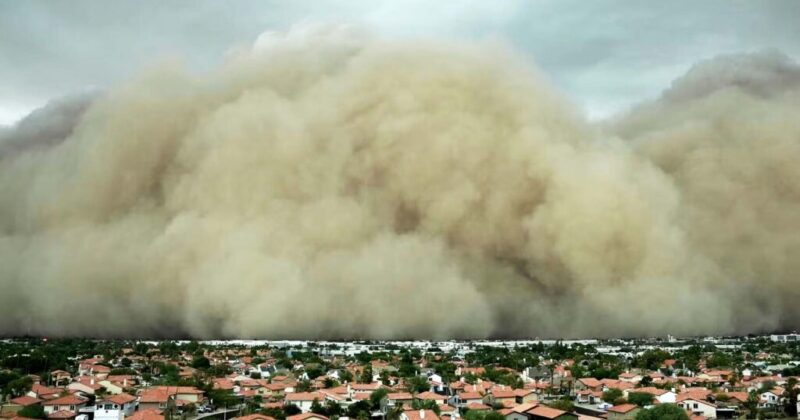
A massive dust storm — known as a haboob — swept through Phoenix on Monday, creating dramatic scenes as walls of dust blanketed the metro area and Sky Harbor International Airport.
The storm disrupted road and air travel and knocked out power for thousands of residents, officials said.
The storm in Arizona brought heavy rain exceeding 2 inches in some areas and wind speeds up to 66 mph following the dust surge.
Photos and videos shared widely on social media showed vast, brown plumes overtaking highways and city skylines.
Stunning view of the dust storm that hit Arizona on August 25.
This was captured from Gold Canyon.pic.twitter.com/xsw9yGowPM
— Massimo (@Rainmaker1973) August 26, 2025
Dust storm blankets everything in its path as it rolls through the Phoenix, Arizona, area. pic.twitter.com/FpecQcryHo
— Fox News (@FoxNews) August 26, 2025
How crazy is this time-lapse dust storm video from Arizona yesterday? pic.twitter.com/iFzTfKK36b
— Vince Langman (@LangmanVince) August 26, 2025
Aircraft flies through a large dust storm hitting Phoenix, Arizona, on August 25, 2025.pic.twitter.com/U51JjL5dWU
— Massimo (@Rainmaker1973) August 26, 2025
While dust storms can happen across the United States, haboobs occur most often in arid and semi-arid regions, particularly the desert Southwest.
The NWS says these events happen “fairly regularly” during summer monsoon season in Arizona.
What Is a Haboob?
According to the National Weather Service (NWS), a haboob is a type of dust storm caused by strong downdrafts from a thunderstorm.
The name originates from the Arabic word habb, meaning “to blow,” and was first used to describe frequent storms in Sudan before being applied to similar events in the Middle East, Australia, and the arid regions of the U.S. Southwest.
How Do Haboobs Form?
Unlike other dust storms, haboobs specifically result from collapsing thunderstorm clouds.
When a thunderstorm pushes air downward, the gusts hit dry ground and surge outward, lifting dust and debris into a towering wall of particles.
These storms are most common in desert regions with dry soils, such as Arizona, and often strike with little warning.
Dangers of Dust Walls
Haboobs can cause rapid visibility loss, high winds, and dangerous travel conditions.
The NWS warns motorists to pull off the roadway, turn off all vehicle lights, and wait for the storm to pass. “Pull aside, stay alive,” is the Arizona Department of Transportation’s slogan.
Leaving headlights on, the NWS cautions, risks rear-end collisions from other drivers trying to follow taillights in near-zero visibility.