

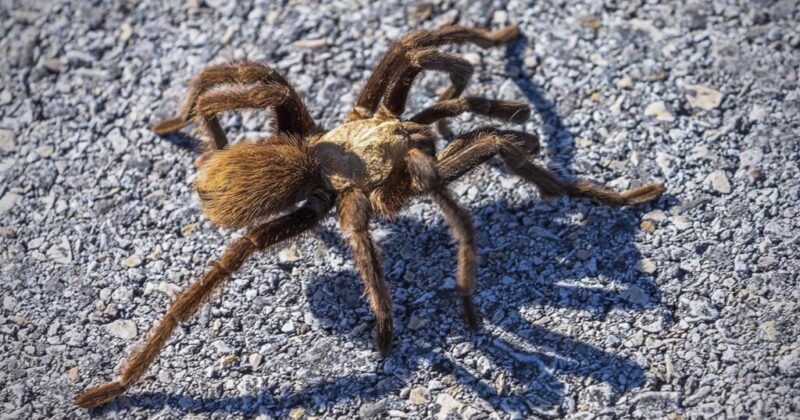
Tarantula mating season is right around the corner, and if you live in the Western or Southwestern United States, expect to see thousands of these hairy, gentle giants on the move between September and November.
According to California State Parks scientist Dan McCamish, the male spiders will emerge from their burrows in search of a mate — a one-way mission for many, who will either find a female or die trying.
“They generally wait for the first fall seasonal rain — they really respond to the late summer warmth and the increase in moisture,” McCamish told USA Today.
When and Where You’ll See Them
Tarantulas are most visible at dusk and early dawn, and in some places, they can be seen crossing roads in large numbers.
States where sightings are common include:
-
California
-
Texas
-
Arizona
-
Florida
-
New Mexico
-
Nevada
-
Colorado
-
Utah
-
Oregon
-
Washington
These arid and semi-arid regions provide ideal habitat for tarantulas.
Should You Be Concerned?
Despite their intimidating size and appearance, tarantulas are docile, and their venom is not dangerous to humans. However, McCamish advises leaving them alone.
“It’s a wild animal — it doesn’t want to be picked up and loved and hugged,” he said.
“They’re gentle, ecologically valuable animals.”
If threatened, tarantulas may:
-
Raise up on their hind legs and expose their fangs
-
Launch urticating hairs, which can irritate human skin and even kill small animals
The Mating Process: Risky Business for Males
Most of the spiders spotted walking about are males, while females stay close to their burrows, waiting for a mate. Once a male tarantula emerges in fall, he’s running on borrowed time:
“If it is unsuccessful in finding a mate during the season, it will likely die due to exhaustion,” McCamish explained.
Even after mating, the male isn’t out of danger — the female may eat him.
The female then guards a cocoon containing 500 to 1,000 eggs, which hatch after six to nine weeks.
An Indicator of a Healthy Ecosystem
Tarantulas play an important role in their environment, and McCamish says their presence is a positive sign:
“If there are tarantulas living somewhere, you can generally assume the habitat is functioning.”
During winter, tarantulas enter a state of torpor, staying in their burrows until they emerge again in spring to hunt, and fully come out in the fall to mate.