

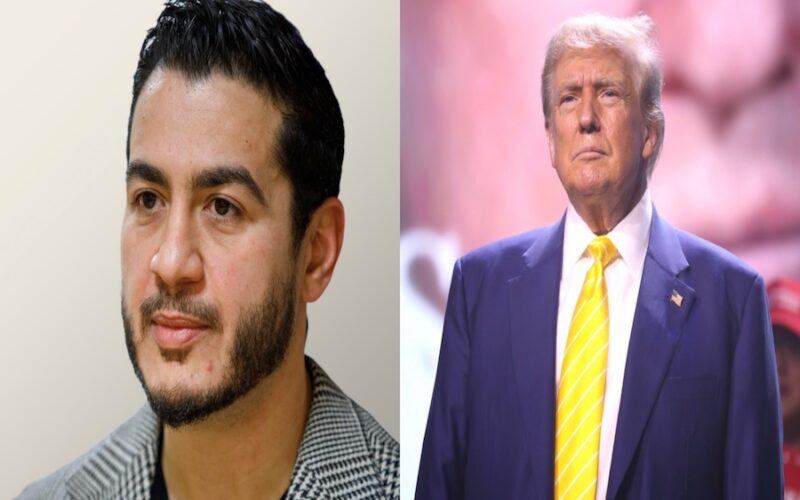
President Donald Trump has announced his intention to meet with Michigan’s Senator-elect, Abdul El-Sayed, regarding a healthcare proposal El-Sayed has dubbed ‘Trumpcare.’
In a recent interview with the New York Post, Trump praised El-Sayed’s rebranding of a single-payer plan as “very smart,” commending the incoming senator’s efforts.
While a specific meeting date was not disclosed, Trump expressed optimism about potential negotiations saying, “Maybe there’s some place in the middle that we could go.”
Potential Collaborations
Expressing a desire to collaborate with Democrats, Trump mentioned, “I’m just going to veto everything there is, and then at some point I think they’re going to want to negotiate.” He noted healthcare as an area ripe for cooperative efforts, stating, “We can do health care. We can do a lot of great things together.”
El-Sayed, a physician and former public health official, has advocated for Medicare for All, a single-payer system ensuring coverage for every American. Earlier in November, he posted a visual of a mock gold insurance card labeled ‘Trumpcare,’ suggesting a comprehensive plan guaranteeing healthcare from start to finish.
The conceptual card outlines coverage for hospital care, prescriptions, and dental services, featuring terms indicating no premiums or deductibles. Trump later shared this post on Truth Social, further promoting the idea.
POLL: Will America Regret Giving The Democrats Power?
Trump says he’ll meet with Senator-elect Abdul El-Sayed (D) to discuss “Trumpcare” proposal Per NYP pic.twitter.com/queYepWE1K
— OSZ (@OpenSourceZone) November 24, 2026
El-Sayed has previously stated he would be open to using the Trump name if it meant progressing policy, telling NPR, “Put his name on it. He’ll probably pass it. I don’t care what it’s called.”
His ideal plan resembles a public education system, proposing a guaranteed option available to everyone while still allowing for private insurance.
While Trump has yet to endorse Medicare for All wholeheartedly, he indicated in a Fox News interview that he remains open to engaging with Democrats, acknowledging both strengths and weaknesses in their healthcare proposals.
His comments about discovering a middle ground and creating opportunities for cooperation reflect a preference for negotiation over accepting progressive policy outright. The White House has labeled related single-payer proposals as potentially disruptive.
Estimates regarding the financial implications of Medicare for All vary widely. The Congressional Budget Office has projected that federal spending could increase by approximately $1.5 trillion to $3 trillion annually by 2030. Reports indicate that implementing such a system could lead to total added federal costs reaching between $20 trillion to $40 trillion, with some analysts speculating figures as high as $47 trillion.
Countries with government-run universal healthcare often face challenges, including longer wait times for non-emergency procedures. For instance, the Fraser Institute documented a median wait of 30.7 weeks in Canada for specialist care, the longest in their recorded surveys. In the UK, over 100,000 patients reportedly waited more than a year for essential treatments.
