
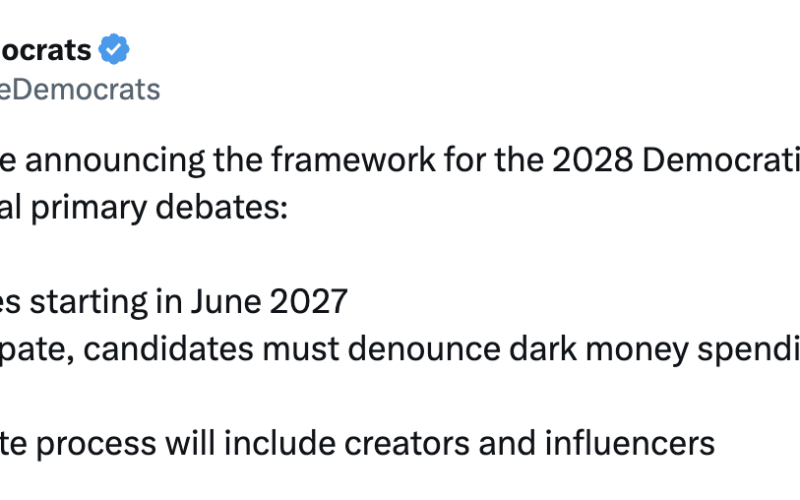
The Democratic National Committee (DNC) is announcing new rules that will significantly affect the 2028 presidential debates. Candidates seeking a spot on the debate stage will have to publicly denounce any ‘dark money’ ads, even if they are designed to support their own campaigns.
This mandate, revealed on Monday, encompasses a wide array of advertising platforms, including TV, radio, digital, billboards, and mailings funded by super PACs and specific nonprofits. Candidates must reject support from any external group running ads in their favor.
Additionally, if an attack ad is published against a candidate, all rivals must similarly denounce it. Although outside groups can continue to purchase ads, the DNC wields considerable power; compliance is essential for debate participation.
Notable Democratic figures, including Senators Elizabeth Warren, Andy Kim, and Bernie Sanders, have already backed this pledge. Furthermore, the DNC is tightening its enforcement regarding the primary election calendar.
Those who campaign in states that jump ahead in the order may face disqualification from participating in DNC debates and could also jeopardize their ability to earn delegates in early voting states.
Another significant aspect of the pledge involves restrictions on fundraising. Candidates will not be allowed to enter joint fundraising agreements with any Democratic Party committee until they are the presumptive nominee. This also affects their ability to approve campaign ads financed by state or local party committees.
Overall, the DNC has scheduled five debates for 2027 and seven for 2028. The initial debates are set for June and July of 2027, with the last debate tentatively planned for March 2028. Specific details, including dates and locations, are expected to be released in January.
A unique twist in this rollout is the inclusion of social media influencers and online creators aimed at attracting a larger audience. Little information has been provided on their role, creating uncertainty about their potential impact on the debates.
Concerns have been raised about the relationships between political campaigns and online creators, particularly regarding transparency. Experts highlight the importance of clear disclosures whenever influencers promote political content.
Polling and grassroots fundraising efforts will play a critical role in determining candidate eligibility for these debates. Should there be a need for two nights of debates, candidates will be randomly assigned to ensure fairness.
Past Democratic debates have employed similar formats, as seen in the 2020 primary cycle. The DNC’s debate planning committee will be led by seasoned advisers with extensive campaign experience, ensuring a comprehensive strategy.
DNC Chair Ken Martin noted that this initiative reflects the party’s momentum following recent midterm victories. He emphasized the importance of creating a united front as Democrats aim to reclaim the White House in 2028.
