

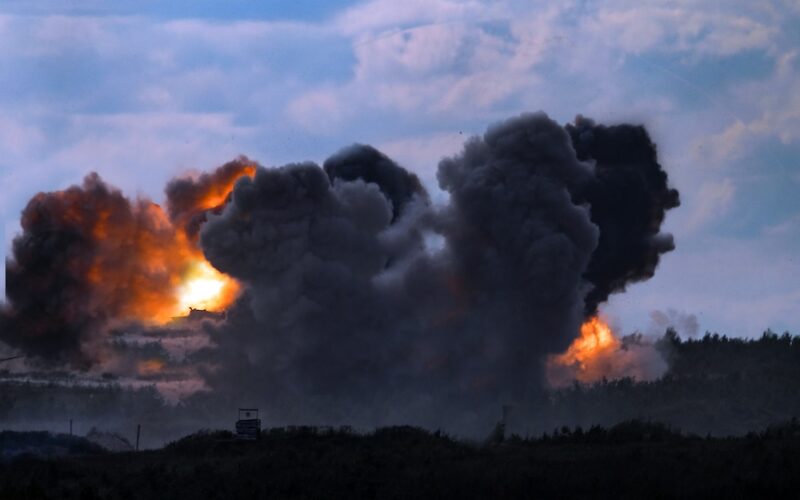
In a marked escalation of tensions, Iran initiated a series of drone assaults on an American military base in Kuwait on Wednesday. This occurred just hours after U.S. forces executed precision airstrikes against an Islamic Revolutionary Guard Corps (IRGC) missile facility.
The Iranian military declared that Ali Al Salem Air Base, crucial for U.S. operations, was intentionally targeted in response to Tuesday’s American offensive on Qeshm Island.
Kuwaiti defense officials reported that systems were activated to counteract the incoming drones. There were no immediate reports of casualties or major damage, and Iranian assertions regarding struck U.S. assets are yet to be validated.
This confrontation significantly heightens the ongoing conflict between the United States and Iran, with American personnel facing increasing threats across the Gulf region.
U.S. Response and Military Actions
U.S. aircraft struck the IRGC missile launch site on Qeshm Island after Iranian forces had targeted U.S. troops and installations. A military representative confirmed that precision-guided weapons were deployed in an operation regarded as a necessary defensive measure.
“The strike was in direct response to IRGC aggression aimed at U.S. soldiers and resources. U.S. Central Command remains poised to ensure the safety of American forces throughout the region,” the official noted.
Earlier on Tuesday, there was an attempted Iranian drone strike against a U.S. radar facility in Bahrain. U.S. Central Command has refuted Iranian claims of damage to American equipment by confirming successful intercepts of the drones.
Bahrain, home to the U.S. Navy’s Fifth Fleet, reported additional Iranian aerial threats on Wednesday. Defense systems intercepted several of these attacks, prompting local authorities to advise residents to seek safety.
The recent hostilities have drawn condemnation from several Gulf nations, including Kuwait, Saudi Arabia, and Qatar. These countries warned that ongoing military confrontations could destabilize the region and impact diplomatic dialogues.
Kuwait’s Foreign Ministry labeled the Iranian assaults as breaches of its sovereignty and cautioned about the dangers of further escalations undermining regional security. Saudi Arabia echoed similar sentiments, holding Iran accountable for the rising tensions.
Ongoing Diplomatic Efforts
These incidents coincide with President Donald Trump contemplating his next moves in the conflict, while U.S. military assets are increasingly deployed to the area amidst diplomatic efforts.
The violence complicates ongoing initiatives to restore secure navigation through the Strait of Hormuz, a vital channel for global energy shipments. Iranian attacks on commercial shipping persist despite American protective measures.
The U.S. military confirmed that no American service members were harmed in the recent Iranian attacks this week. Meanwhile, Iranian Army Commander-in-Chief Amir Hatami warned of a robust response to any further U.S. military action.
Amidst this turmoil, Qatar is striving to bridge the gap between Washington and Tehran, while regional leaders advocate for a peaceful resolution. Currently, American forces remain vigilant as the latest developments threaten to involve more Gulf nations in the escalating conflict.
