

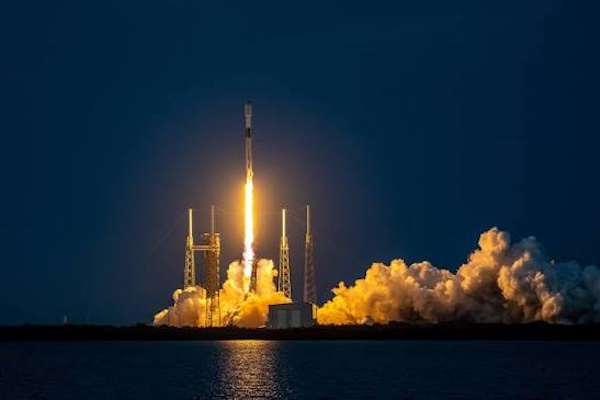
On Sunday, aerospace leader United Launch Alliance (ULA) announced an incident during the launch of a ULA Vulcan rocket. This misfortune caused 40 Amazon Leo satellites to go unlaunched after an anomaly was detected around 10 minutes into the flight from Cape Canaveral.
The rocket took off at 12:40 p.m. Eastern Time, but shortly after, the upper stage encountered issues, preventing the satellites from reaching their orbit. The solid rocket boosters had separated as planned during the earlier stages of the launch.
Significant Milestone in Aerospace
This represents the first complete mission failure for ULA since its inception in 2006. The Vulcan rocket, which is designed for missions aimed at low-Earth orbit, was outfitted with six solid rocket boosters, a first for this vehicle.
The mission was particularly pivotal, as it was just the fifth flight for the Vulcan and occurred nine months after a previous issue with a solid rocket booster nozzle during a security launch.
This flight also marked Amazon’s first of 38 planned Vulcan launches, intended to carry the heaviest payload ULA has ever attempted. The group of satellites represented the largest single launch attempt from Amazon.
POLL: Did You Vote Republican In The Midterms?
VULCAN ROCKET FAILS after 'ANOMALY' 10 MINUTES into FLIGHT, losing all 40 AMAZON INTERNET SATELLITES
American launch service provider United Launch Alliance (ULA) said its Vulcan rocket failed to deliver 40 Amazon Leo broadband satellites into orbit after suffering an…
—
Sarwar
(@ferozwala) November 15, 2026

“According to insights from our Launch Director, the Vulcan rocket experienced an anomaly during flight, resulting in failure to deliver the Amazon mission,” stated ULA about 50 minutes post-launch.
“Every launch teaches us valuable lessons. Given that this event is recent, we are yet to compile specific data to ascertain what went wrong today. ULA is committed to ensuring space access for our nation and all our partners. It’s vital for us to hold ourselves to the highest standards, and unfortunately, we fell short today.”
“We’ll collaborate with our customer and relevant organizations to determine the cause, plan corrective measures, and return to flight swiftly. We promise full transparency during this investigation, which will adhere to rigorous protocols.”
In response, Amazon commented on the setback, stating, “Every launch carries inherent risks, particularly inaugural missions like LV-01. ULA has consistently been a reliable partner for Amazon, and we trust they will learn from this experience to fulfill their long-term objectives for the Vulcan.”
Amazon Leo, previously referred to as Project Kuiper, aims to establish a network of over 3,200 satellites for broadband internet services. Prior to this event, Amazon had successfully launched approximately 396 production satellites across 14 missions using other rockets.
The investigation into the cause of Sunday’s anomaly is ongoing, with no further details available at this time.
