

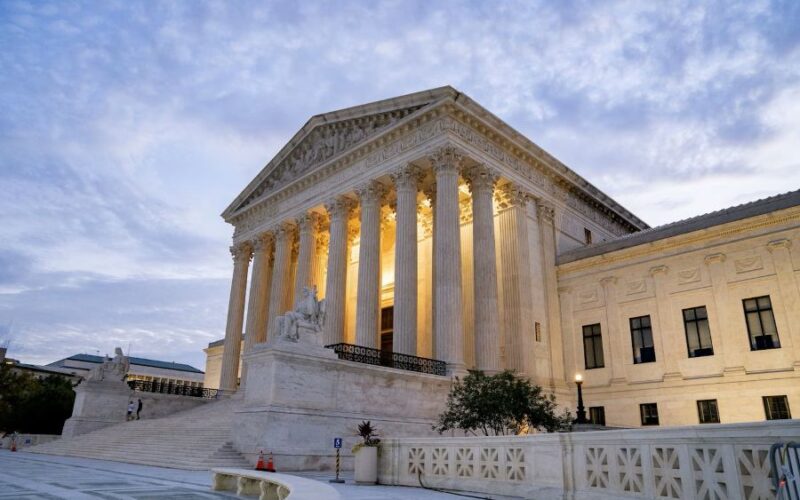
The U.S. Supreme Court took action on Monday to vacate a case concerning the treatment of a transgender inmate in Colorado. The ruling emphasizes the authority of prison officials to manage facilities without undue interference.
The case, Roybal v. Griffith, originated in 2020 involving Darlene Griffith, a biological male identifying as a transgender woman. While held in pretrial detention at El Paso County Jail, Griffith sought to be housed in a female unit but was instead placed among male inmates.
Griffith’s legal team asserted that the denial of appropriate housing and items like cosmetics violated the Equal Protection Clause of the Fourteenth Amendment, which mandates equitable treatment under the law.
A lower federal court previously ruled in favor of Griffith, citing equal protection concerns and objecting to certain search practices. The 10th Circuit later reinstated the case, allowing claims regarding housing and personal items to proceed.
The appeals court determined that a stringent standard of review should apply to sex-based regulations, asserting that Griffith had presented a credible claim. Sheriff Joseph Roybal and his team petitioned the Supreme Court, advocating for the need for prison administrators to exercise discretion in operations.
Griffith’s legal representatives countered, pointing out that prisons are already afforded a level of deference in legal considerations, regardless of scrutiny standards.
POLL: Should Trump’s DOJ Prosecute Jack Smith?
The US Supreme Court overturned a ruling that a Colorado inmate had his rights violated because the prison housing him declined to give him lipstick, female undergarments, and access to the women’s living quarters.
The lawyers of the inmate, Darlene Griffith, claimed that the… pic.twitter.com/KvJNZyMGju
— AF Post (@AFpost) November 10, 2026
The Trump Administration, represented by Solicitor General John Sauer, submitted a brief backing Colorado officials. Sauer highlighted that states can maintain sex-based classifications under constitutional law, particularly in areas such as women’s sports. According to Sauer, states are not mandated to make specific accommodations for transgender individuals.
In its recent ruling, the Supreme Court referenced earlier decisions, including West Virginia v. B.P.J., which upheld state regulations restricting female sports participation to biological females, and United States v. Skrmetti, allowing state limitations on medical treatments for transgender minors. The unanimous decision nullified the previous court’s ruling and directed the case back for additional examination by the 10th Circuit.
On a related note, the Court on October 21 declined to suspend a federal policy that permits hormone treatments and gender surgeries for inmates, a policy the Trump administration had sought to restrict.
Estimates indicate that around 1,000 federal inmates identify as transgender, with approximately $1.65 million of taxpayer dollars spent on related procedures during the previous administration.
