

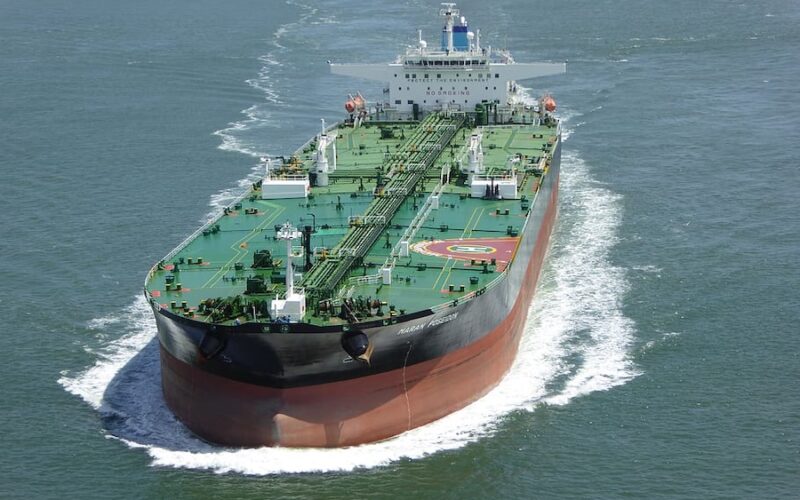
QatarEnergy, the largest global exporter of liquefied natural gas, has accomplished an impressive feat by signing two lengthy purchase agreements with U.S. suppliers in just one week. These contracts assure a long-term supply from Gulf Coast facilities as QatarEnergy’s Ras Laffan export plant remains temporarily sidelined due to Iranian missile attacks and shipping limitations in the Strait of Hormuz.
On Thursday, QatarEnergy finalized a deal to acquire as much as 3 million metric tons of LNG annually for two decades from Woodside Energy’s Louisiana LNG initiative. The construction of the facility in Calcasieu Parish, near Lake Charles, is underway, aiming for its first production by 2029, with deliveries projected to start in 2030.
Initially, volumes will derive from the second liquefaction train, expanding to the full contracted quantity once operations begin for the third train. The site’s first phase is designed to handle a combined capacity of 16.5 million metric tons per year.
Just prior, QatarEnergy inked two sale-and-purchase agreements with Cheniere Energy for up to 4 million metric tons per annum. This includes 2 million metric tons from Cheniere’s Sabine Pass facility in Louisiana and another 2 million from Corpus Christi in Texas. Deliveries are slated to commence in the early 2030s and continue through 2054.
Of the Sabine Pass volume, one million metric tons is contingent on a final investment decision for an expansion phase at that location. The cargoes will be sold on a free-on-board basis, priced against the U.S. Henry Hub index plus a set fee. Cumulatively, these contracts represent 7 million metric tons annually.
POLL: Should Barack And Michelle Obama Stay Out Of Politics?
QatarEnergy signs second deal in a week to buy U.S. LNG https://t.co/V8fHZguLaX
— John Solomon (@jsolomonReports) November 1, 2026
“We are excited to further advance our global supply and trading profile with another long-term LNG acquisition from the United States. This positions QatarEnergy as the largest LNG buyer from the U.S. and strengthens our capability to meet rising global LNG demands,” stated Qatar’s energy minister and QatarEnergy CEO, Saad Sherida Al-Kaabi. He emphasized that these purchases, combined with the company’s joint venture with ExxonMobil in the Golden Pass LNG facility in Texas, are crucial for future growth and diversification.
The agreements emerge as two production units at Ras Laffan, which boast a combined annual capacity of 12.8 million metric tons, remain in disrepair. Repair timelines are anticipated to take three to five years, leading QatarEnergy to estimate an annual revenue loss of around $20 billion.
With traffic through the Strait of Hormuz reduced due to ongoing conflict with Iran since February, U.S. supplies present a viable alternative that doesn’t rely on routes through the Persian Gulf.
Cheniere now operates about 56 million metric tons of annual capacity and is pushing forward with expansions in both Louisiana and Texas. The abundance of associated gas from the Permian Basin, where oil production reached a record of 6.8 million barrels per day in September, has kept American natural gas competitive, given the near-zero marginal production costs due to the necessity of transporting gas to market.
Ed Hirs, who directs energy market studies at the University of Houston, asserted that QatarEnergy is strategically positioning itself for the long haul in the global market while diversifying its contracts in light of constraints on its facilities. In Qatar, the marginal cost of gas extraction stands around 5 cents per thousand cubic feet, vastly lower than the estimated operating costs of $1.50 to $1.75 in the Marcellus and Utica basins.
Louisiana has provided substantial property tax incentives for these initiatives, with Woodside’s facility securing a $2.8 billion exemption over a decade and expected to create over 4,000 temporary construction jobs alongside 350 permanent positions. Meanwhile, Cheniere’s Sabine Pass facility acquired a $4.9 billion exemption over the same timeframe.
By 2029, QatarEnergy anticipates its LNG exports to reach 110 million metric tons once the remaining capacity of 64.2 million metric tons is fully operational and repairs are finalized. The new U.S. purchases are part of a broader trading strategy that leverages the company’s fleet to generate revenue, even in scenarios where access to the Hormuz Strait may again be hindered.
