

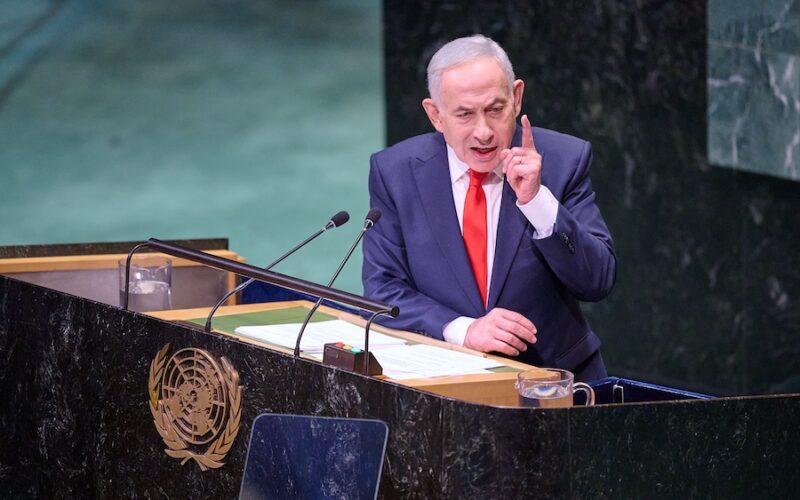
Israeli Prime Minister Benjamin Netanyahu, along with his political coalition, is urgently requesting that polling stations extend their hours on Tuesday as a record number of voters head to the polls in a pivotal election.
The Likud party formally asked the Central Elections Committee to keep the voting open past the usual 10 p.m. closing time, a request supported by the ultra-Orthodox Shas party and National Security Minister Itamar Ben Gvir’s Otzma Yehudit party.
This unusual initiative follows reports from election officials of unprecedented voter turnout, with participation reaching 66.7% by 6 p.m.—the highest ever recorded at that point in the election timeline.
This represents a notable rise from the 57.7% recorded during Israel’s 2022 election, indicating that the turnout could significantly impact the political scene.
Though Likud did not disclose the reasons for their request, Shas highlighted concerns over long lines that could prevent voters from casting their ballots before closing time.
“We want to avoid a scenario in which citizens in line cannot vote,” Shas commented.
Despite this, election officials assured that anyone in line by the 10 p.m. deadline would still be allowed to vote, no matter how long it took.
Dean Livne, the acting director general of the Central Elections Committee, reassured voters earlier, stating, “We promise everyone will vote,” confirming that polling would continue until all those present before the cut-off had cast their votes.
The request faced immediate opposition from Gadi Eisenkot’s Yashar party, which deemed the extension unnecessary and accused Netanyahu of potentially questioning the election’s legitimacy.
Yashar asserted that no extraordinary circumstances warranted a change to the established voting schedule.
In the meantime, Netanyahu intensified his appeals to conservative voters, cautioning that heightened participation among Arab Israelis and left-wing voters posed a threat to his governing coalition.
<p“They are trying to steal the election from us,” Netanyahu proclaimed in a video to Likud supporters, urging them to vote. “No beach, no barbecue, everyone heads out to support Likud,” he emphasized.
Additionally, he warned that a coalition could emerge involving Arab parties, framing the election as a critical choice regarding Israel’s national identity and security.
This comes amid reports of strong turnout in Arab communities, where increased voter engagement could hinder Netanyahu’s chances of regaining a parliamentary majority.
The Central Elections Committee also responded to allegations of voting irregularities, confirming that no evidence of systematic ballot tampering had been discovered during their investigations.
This election presents Netanyahu with one of his biggest political challenges since the Hamas attacks on October 7, 2023, amid ongoing regional conflict.
Former military chief Eisenkot is positioning himself as a strong contender, aiming to unite an opposition coalition to potentially end Netanyahu’s current term.
A majority in Israel’s 120-seat Knesset requires a coalition of at least 61 seats, meaning that even minor shifts in voter turnout could determine the next government’s control.
Notably, former President Donald Trump has publicly backed Netanyahu, adding an international perspective to a closely watched election.
With record voter turnout and both sides rushing to energize their supporters, the last hours of voting may prove crucial for the election’s outcome.
As of the latest reports, election officials had yet to announce any approval for a general extension beyond the accommodations for those already in line.
