

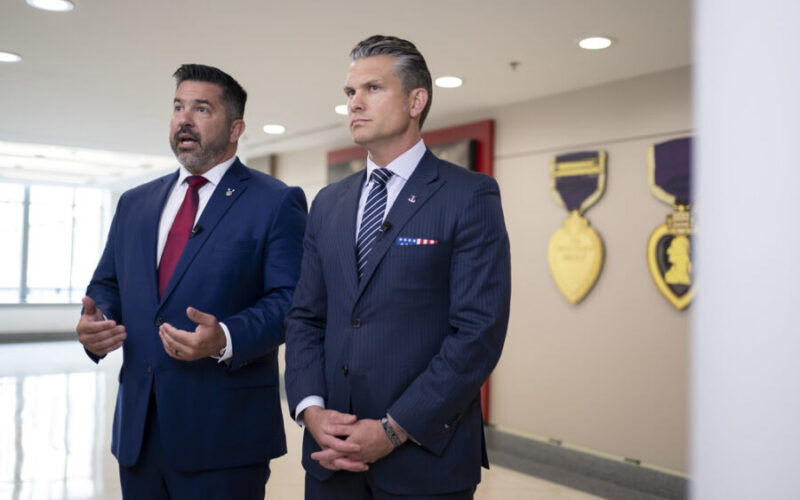
The Pentagon has launched the FORTRESS America initiative designed to empower military bases across the continental United States to sustain operations for a minimum of 90 days without external aid.
This program, which stands for Federal Operations for Resilience, Troop Resources, Energy, Supply, and Survivability, was introduced by Defense Secretary Pete Hegseth on September 30. Officials regard it as a vital insurance policy for national security, aimed at decreasing reliance on civilian power grids and overseas supply lines.
In line with the plan, military bases are required to maintain their own electricity, water, fuel, and communication systems. The goal is to ensure that power sources are robust, diversified, and capable of functioning independently. Options being evaluated involve portable nuclear reactors, robust battery storage, and microgrids that can detach from civilian power systems.
This strategic framework would ensure command centers, aircraft operations, and logistics can proceed uninterrupted even in the case of cyberattacks or sabotage targeting the commercial energy grid. The initiative builds on previous programs and has significant funding allocated for the development of microreactors at various sites, with plans for initial deployment soon.
A key aspect of the initiative is enhancing supply-chain resilience. Hegseth detailed that FORTRESS mandates the stockpiling of essential items like munitions, fuel, critical minerals, and medical supplies, including blood, all determined by anticipated wartime needs.
The plan also necessitates having at least two viable supply sources for critical components to eliminate vulnerability from a single-source dependency. Officials seek to bring industrial capabilities, particularly for rare earths and semiconductor production, back onshore.
POLL: Do You Approve Of Secretary Of War Pete Hegseth?
FORTRESS is strategic deterrence in action, ensuring our defenses are hardened, proactive, and ready.
I created FORTRESS America because we can no longer rely on two oceans to protect us. That outdated assumption no longer reflects the threats we face.
President Trump and…
— Sean Parnell (@SeanParnellASW) October 25, 2026
The initiative also includes forming the Civil Reserve Manufacturing Network, which aims to identify commercial factories capable of pivoting to defense production in times of crisis. This will involve preparing technical specifications and enhancing cybersecurity protocols.
Additional components focus on strengthening installation defenses and cyber resilience, ensuring that space-based and electromagnetic capabilities are safeguarded from potential disruptions.
This comprehensive strategy is in alignment with broader defense planning efforts, recognizing that future conflicts may be characterized by disruptions to global supply chains and direct threats to U.S. infrastructure.
Pentagon spokesperson Sean Parnell has emphasized that dependence on civilian infrastructure for defense is a considerable risk. He noted that a lack of electricity impacts essential services like communications and logistics. Parnell stated that the traditional notion of security provided by geographic isolation is becoming less relevant in today’s threat landscape.
Initial efforts highlight energy resilience, with planned multi-year investments rather than a singular large budget allocation. The specifics regarding timelines and overall costs for the roughly 500 installations remain under discussion as of this update.
