

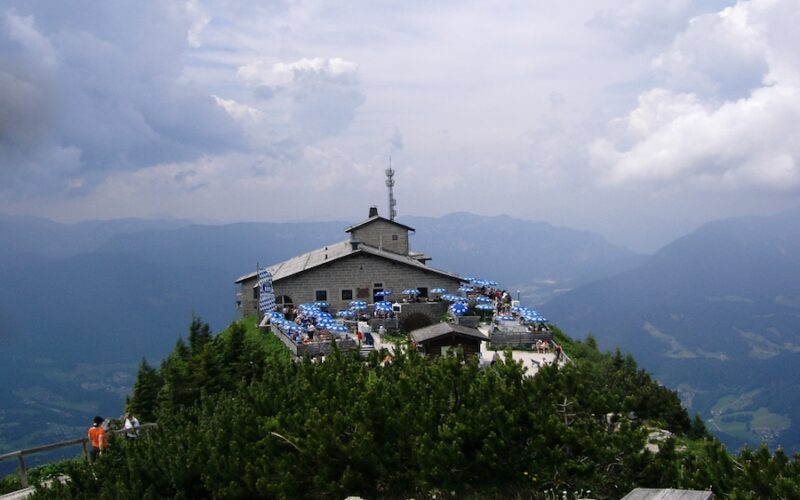
A significant structure, the Kehlsteinhaus, also known as the Eagle’s Nest, was largely destroyed by fire on Friday evening on a peak above Obersalzberg in Bavaria, Germany. Known for its ties to Adolf Hitler, this mountaintop getaway transformed into a symbol of Allied triumph post-war.
Fire alarms triggered around 9:15 p.m. local time, prompting immediate emergency responses. Upon arrival, firefighters discovered the building fully engulfed in flames.
More than 200 emergency personnel responded, though their efforts faced challenges due to the steep elevation and snowy conditions. Flames were visible throughout the early hours of Saturday, with entry to the area requiring oxygen gear, officials reported.
No injuries occurred, as the building was closed at the time of the fire. Damage has been described as extensive, with the site almost wholly destroyed. Authorities are evaluating the structure’s future and heritage implications.
Initial damage evaluations suggest costs could reach millions of euros, although specific evaluations are still pending.
Law enforcement detained a local 33-year-old man related to the incident. He was spotted on a red motorcycle lacking a license plate as responders approached. Authorities arrested him, and he is undergoing mental health evaluation.
Prosecutors indicated signs of mental illness might affect his legal responsibility. Confirmations of arson are ongoing, with evidence linking the suspect to the fire.
POLL: Should Foreigners Be Banned From Buying American Farmland?
WATCH: Hitler’s Eagle’s Nest (Kehlsteinhaus) damaged beyond repair after massive fire; arson suspected pic.twitter.com/RtziyDyIjG
— Klaxon Wire (@KlaxonWire) October 24, 2026
The Kehlsteinhaus was finished in 1938 after commencing construction in 1937. Commissioned by Martin Bormann, it served as a venue for Nazi officials and guests, accessed through a tunnel and elevator carved into the mountain.
Adolf Hitler visited the site just over a dozen times for brief formal gatherings, preferring the nearby Berghof due to safety concerns related to weather and altitude.
Allied bombings in April 1945 caused substantial damage to the Obersalzberg area, but the Kehlsteinhaus remained relatively intact due to its unique location.
In early May 1945, Allied troops, including the U.S. 101st Airborne Division, were among the first to arrive at the site. Many soldiers collected souvenirs while a flag-raising ceremony took place amid the war-torn remnants.
The structure continued to serve as a command facility until 1960, when it transitioned back to Bavarian authorities. Since then, it has functioned as a restaurant and tourist destination, attracting visitors interested in its historical significance related to Nazi leadership and the war’s conclusion in Europe.
Its preservation and accessibility post-war have established it as a notable reference for the Allied victory in Europe.
