

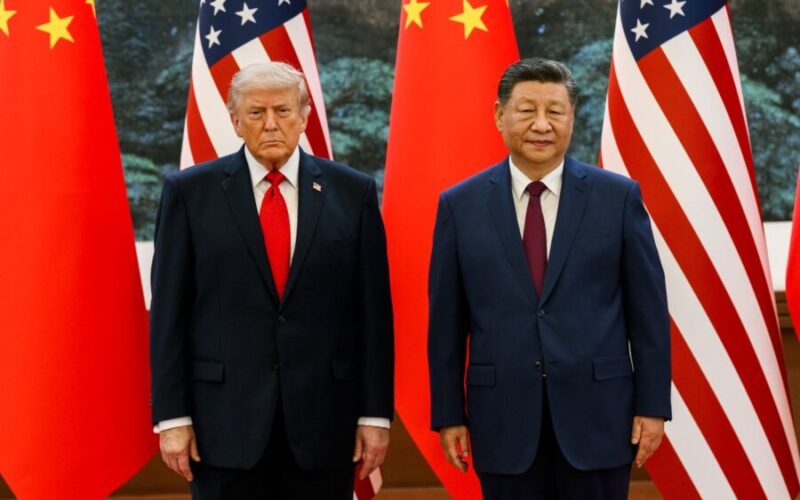
During President Trump’s summit with Chinese President Xi Jinping, a disconcerting incident occurred behind the scenes. A White House staffer was knocked down and trampled as reporters surged towards the two leaders in a Beijing meeting hall.
The situation escalated quickly as Chinese journalists, eager for a glimpse of Trump and Xi, created a stampede that left the aide bruised and shocked. This physical clash became emblematic of the deeper tensions underlying the formalities of the summit.
Trump’s much-anticipated trip marked his first significant visit to China in years, taking place against a backdrop of geopolitical complexities including trade disputes and military activities in the Pacific.
Throughout the journey, the American delegation faced challenges from Chinese authorities, who reportedly imposed strict movement guidelines and employed aggressive crowd-control measures. Journalists experienced interference with their coverage, including being denied access to certain areas and facing lengthy security checks.
A notable confrontation happened at the Temple of Heaven, where Chinese officials barred an armed Secret Service agent from joining the press pool, sparking a 30-minute argument over security protocols. Ultimately, another agent, who had already cleared security, escorted reporters into the site.
Following the temple visit, tensions flared again as Chinese officials tried to obstruct American journalists from reuniting with Trump’s motorcade, leading to frantic negotiations among U.S. staffers and reporters.
Describing the atmosphere as a “s***show,” one American delegate highlighted the growing frustrations behind the veneer of cooperation proclaimed by both governments.
Prior to the trip, the Trump administration implemented heightened security measures due to concerns regarding Chinese surveillance. Staff and reporters were advised to limit electronic communications and use temporary devices while in Beijing.
Despite the evident friction, Trump and Xi maintained a public façade of camaraderie. They discussed various issues, including trade relations and regional military threats, as well as strategies to manage the ongoing Iran conflict.
Yet, the chaotic scenes behind the scenes revealed a starkly different reality, stressing the distrust and tensions that characterize U.S.-China relations today.
