

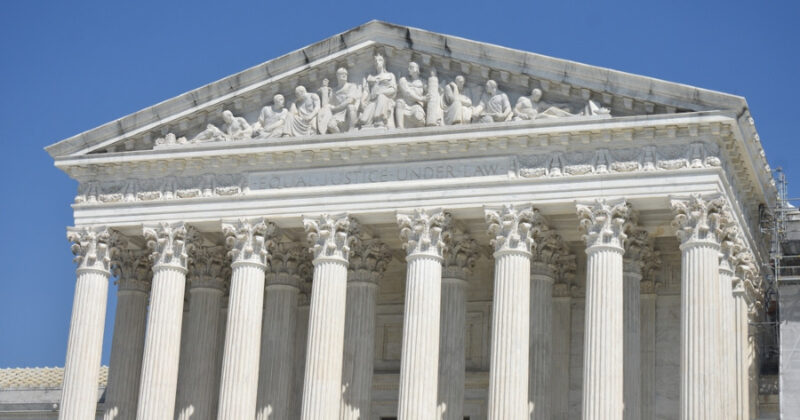
On Thursday, the Supreme Court denied an emergency appeal from Samuel Ronan, who sought to run in Ohio’s Republican congressional primary. State officials had previously rejected his candidacy, claiming he falsely represented himself as a GOP candidate.
The court’s ruling came without any accompanying comments or dissent from the justices, which is standard practice for emergency orders from the shadow docket.
Ronan was aiming for a position in Ohio’s 15th Congressional District, planning to challenge incumbent Rep. Mike Carey. He filed as a Republican, asserting his loyalty to the party and its principles—initially gaining certification from the Franklin County Board of Elections.
However, his candidacy attracted criticism following a challenge from a Republican voter. The allegation was that Ronan was not a genuine Republican.
His previous attempt to lead the Democratic National Committee was highlighted by detractors as a sign of his insincerity in switching parties.
The county board was split on his qualification, prompting Ohio Secretary of State Frank LaRose to cast the decisive vote against him.
Ronan’s legal actions were rebuffed by Ohio Chief U.S. District Judge Sarah Morrison, who determined that safeguarding the integrity of elections took precedence over Ronan’s constitutional rights.
RELATED: Supreme Court Sides With MAGA Leader
The judge noted, “A state is not obligated to allow a candidate on a partisan ballot if he misrepresents his party affiliation, even in light of First Amendment concerns.”
A three-judge federal appellate panel subsequently also denied Ronan’s attempt to re-enter the race.
After this, Ronan and Ohio voter Ana Cordero escalated the matter to the Supreme Court, arguing for their right to vote for him in the primary.
In their emergency application, they claimed that the removal from the ballot was an infringement on their First Amendment rights and defended Ronan’s assertions regarding his party affiliation.
Ohio Attorney General Dave Yost countered their claims, stating there was a clear issue: Ronan was a Democrat.
In their concluding remarks to the justices, Ronan and Cordero expressed concern that maintaining Ronan’s exclusion could set a concerning precedent for future candidates.
