

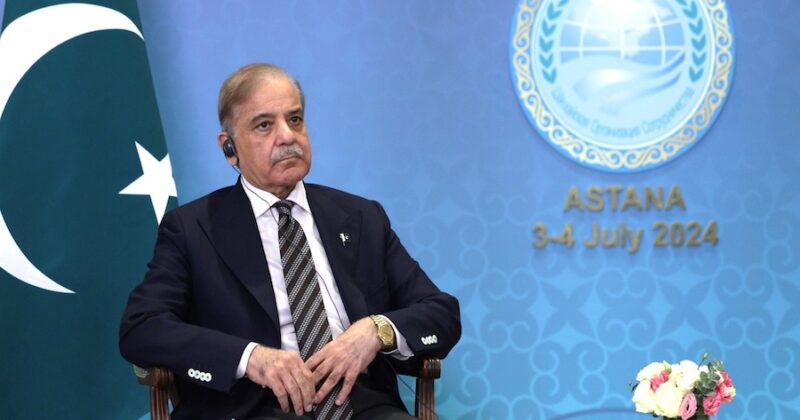
In a significant move, Pakistani Prime Minister Shehbaz Sharif is actively advocating for a two-week extension of the deadline imposed by President Donald Trump, aimed at compelling Iran to reopen the crucial Strait of Hormuz and eliminate the blockade affecting Gulf oil shipping.
This request was made shortly before the established 8 p.m. Eastern Time cutoff, after which the U.S. hinted at possible military actions against Iranian infrastructure.
Diplomatic Efforts in Motion
Sharif, who is serving as a leading third-party mediator along with other regional leaders from Egypt and Turkey, expressed optimism in a post on social media about the progress of diplomatic negotiations, stating they are advancing “steadily, strongly and powerfully.”
“To allow diplomacy to run its course, I earnestly request President Trump to extend the deadline for two weeks. Pakistan, in all sincerity, requests the Iranian brothers to open the Strait of Hormuz for a corresponding period of two weeks as a goodwill gesture,” he posted on X.
<
Diplomatic efforts for peaceful settlement of the ongoing war in the Middle East are progressing steadily, strongly and powerfully with the potential to lead to substantive results in near future. To allow diplomacy to run its course, I earnestly request President Trump to extend…
— Shehbaz Sharif (@CMShehbaz) April 7, 2026
>
In a report to Reuters, an Iranian official confirmed that Pakistan’s proposal is currently under serious consideration ahead of the looming deadline.
The White House acknowledged that President Trump is aware of the request. “The President has been made aware of the proposal, and a response will come,” stated White House Press Secretary Karoline Leavitt to Axios.
Background of the Situation
The current deadline follows an earlier 10-day ultimatum from Trump, which had already seen a 20-hour extension, making the current deadline critical for ongoing negotiations.
Discussions have utilized indirect methods, involving messages exchanged between Trump’s envoy, Steve Witkoff, and Iranian Foreign Minister Abbas Araghchi, facilitated by the aforementioned mediators.
Previously, a framework was proposed that included a potential 45-day ceasefire alongside the reopening of the Strait of Hormuz. This plan was designed in phases to initially ease hostilities and then catalyze further negotiations addressing vital issues such as Iran’s uranium stockpile and regional stability.
Sharif’s initiative for a short extension aligns with this strategic approach, emphasizing the need for an immediate halt to clashes to ensure that diplomacy can thrive, paving the way for a resolution to the ongoing conflict.
Although no agreement has been finalized, multiple sources report that negotiations are progressing well.
