

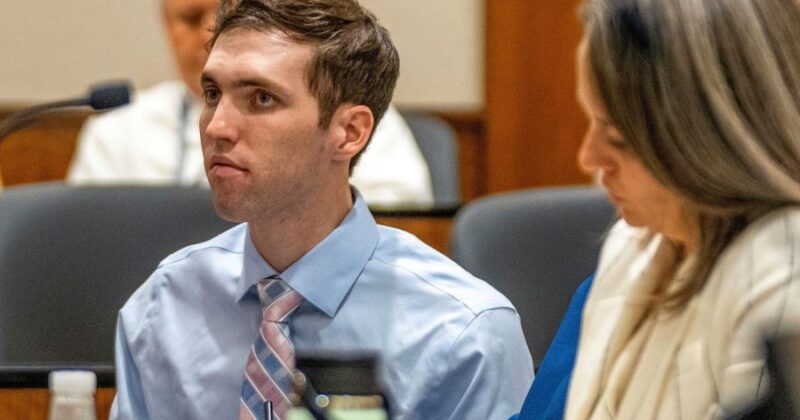
In a recent court filing, Tyler Robinson’s attorneys contend that the bullet retrieved in the autopsy of conservative commentator Charlie Kirk may not correspond to the firearm alleged to belong to the accused shooter. This information comes as part of an effort to postpone critical legal proceedings in the case.
Robinson, who is 22 years old, faces grave charges including capital murder, with the potential for the death penalty stemming from the tragic incident at Utah Valley University on September 10.
The defense motion, filed on Friday, points out that the Bureau of Alcohol, Tobacco, Firearms and Explosives was “unable to identify the bullet recovered at autopsy to the rifle allegedly tied to Mr. Robinson.” This assertion indicates possible gaps in the prosecution’s case.
To bolster their defense, the legal team may call upon an ATF firearms analyst to present exculpatory evidence. Additionally, they request a delay of at least six months for the preliminary hearing, citing the intricate nature of the forensic evidence and the need for external experts to provide thorough analysis.
According to the filing, DNA reports from both the FBI and ATF will require ample time for analysis due to the presence of multiple DNA samples on pieces of evidence. The defense emphasizes that interpreting mixed DNA samples while also ensuring validated procedural adherence is a complex process which demands the expertise of forensic biologists, geneticists, and statisticians.
Stop posting that the bullet that killed Charlie Kirk doesn’t match Tyler Robinson’s rifle.
The filing clearly says, “The result of the comparison was inconclusive.” pic.twitter.com/FYjFnqeHuU
— Paul A. Szypula 🇺🇸 (@Bubblebathgirl) March 31, 2026
The defense attorney’s filing also highlights that prosecutors have released an extensive collection of evidence, totaling roughly 20,000 electronic files, videos, and documents. The defense team is committed to identifying any missing materials crucial for their case, acknowledging that this exhaustive review will consume hundreds of hours.
Currently, the attorneys note that Mr. Robinson has yet to receive forensic case files essential for investigating the scientific reports expected to be presented in the preliminary hearing.
In a previous meeting held on March 12, the defense learned that the prosecution plans to reveal “discrete ‘buckets’ of evidence” during the preliminary hearing. These buckets will likely include forensic DNA and ballistic reports from the FBI and ATF, social media information, and testimonies from law enforcement and those close to Robinson.
RELATED: Erika Kirk, Prosecutors Score Legal Win In Death Penalty Case Against Tyler Robinson
Prosecuting attorneys allege that Robinson drove a significant distance to the university to carry out the fatal act against Kirk, 31. Law enforcement has recorded that Robinson was reportedly turned in by his father, who recognized the firearm believed to be used in the incident.
Messages attributed to Robinson indicate he expressed anxiety over retrieving his rifle and concerns about leaving traces of evidence behind. In one of these messages, Robinson allegedly attempts to explain his steps to avoid detection.
RELATED: Tyler Robinson Moves to Block Video of Charlie Kirk Shooting From Being Introduced as Evidence
Robinson is scheduled to return to court on April 17, where discussions will center on whether cameras and microphones will be permitted in the courtroom. Kirk’s widow, Erika Kirk, has called for transparency, asserting the public’s right to follow the proceedings closely: “We deserve to have cameras in there.”
Download the FREE Trending Politics App to get the latest news FIRST >>
