
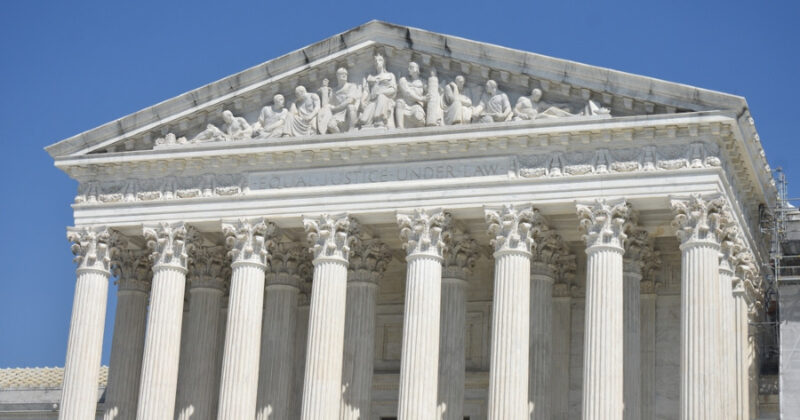
The Supreme Court’s unanimous ruling on Wednesday is a significant victory for internet service providers, concluding that Cox Communications is not liable for failing to disconnect users accused of music piracy.
Justice Clarence Thomas articulated the court’s position, emphasizing that a lower court overstepped by attempting to place copyright responsibility on Cox for actions taken by its customers. Although the ruling was unanimous, two liberal justices chose not to endorse Thomas’ extensive arguments.
Thomas asserted that, according to legal precedents, a service provider is not considered a copyright violator just for offering general access, even if some users utilize the service for infringement.
The ruling sets a higher threshold for lawsuits against internet providers. Thomas clarified that liability would only arise if companies intentionally designed their services for illegal use.
In 2018, Sony and several music labels initiated the lawsuit against Cox, claiming the company disregarded multiple alerts concerning habitual copyright offenders. The legal dispute involved about 57,000 user accounts linked to over 10,000 alleged infringements that were never suspended.
This issue has disturbed both the music and telecommunications sectors, particularly after a jury previously imposed a stunning $1 billion judgment on Cox. The case has also raised alarms among free speech and civil rights advocates, concerned about its implications for various platforms, including bookstores and social media.
“The Supreme Court’s unanimous ruling is a resounding victory for broadband providers and the millions of Americans reliant on dependable internet,” Cox stated. The court’s decision reinforces the idea that internet providers should not act as copyright enforcers and cannot be blamed for customer behaviors, effectively quashing the music industry’s attempts to impose widespread disconnections.
Sony has yet to respond publicly to the ruling.
The case was reviewed by the high court after the U.S. Court of Appeals for the 4th Circuit overturned the $1 billion verdict in 2024, although it did not fully absolve Cox of liability.
The appeals court allowed for the possibility of “contributory” infringement claims, suggesting Cox might owe damages for specific instances where it knowingly allowed continued infringement.
Cox countered that such standards could have far-reaching consequences, asserting it does not benefit from piracy, explicitly bans it in its terms of service, and does not promote illegal activities.
Despite Wednesday’s ruling, there was some disagreement among justices. Justice Sonia Sotomayor, with Justice Ketanji Brown Jackson’s support, argued that Thomas’ narrow interpretation of liability was excessive.
“The majority’s limited view of secondary liability lacks support from legal precedent or statute,” Sotomayor stated.
The Trump administration also backed Cox, warning that holding providers accountable could severely disrupt internet access. Their argument highlighted the potential confusion in distinguishing liability based on account types, such as individual, family, or shared university accounts.
