
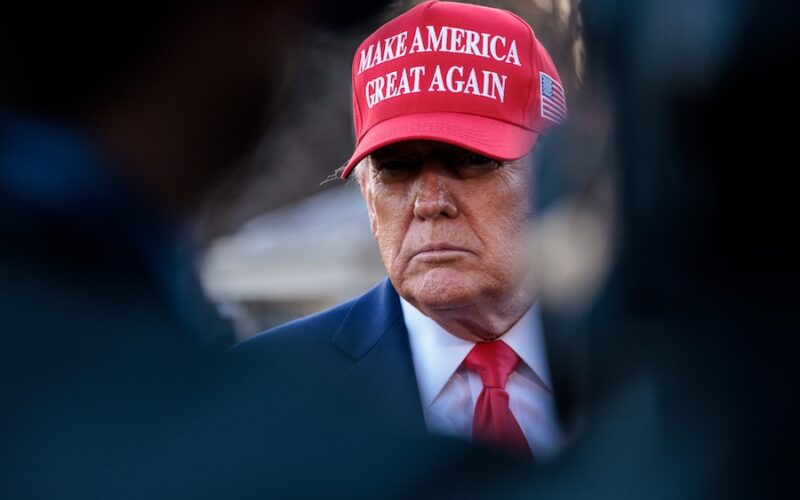
President Donald Trump has taken a decisive step regarding the Iranian regime by issuing a strict ultimatum that demands compliance within a set timetable, threatening significant military action if unmet.
“If Iran doesn’t FULLY OPEN, WITHOUT THREAT, the Strait of Hormuz, within 48 HOURS from this exact point in time, the United States of America will hit and obliterate their various POWER PLANTS, STARTING WITH THE BIGGEST ONE FIRST!” he shared on Truth Social.
This warning has potential implications for escalating the situation, with possible economic fallout and an increased U.S. military presence on the ground in Iran.
The 48-hour countdown requires Iran to eliminate all restrictions affecting navigation in the strait. This compliance would mean unrestricted passage for international shipping, encompassing vessels not part of the conflict.
The Strait of Hormuz is a vital waterway that links the Persian Gulf to the Gulf of Oman, serving as a crucial corridor for global energy. Under normal circumstances, it sees about 20 percent of the world’s oil and substantial volumes of liquefied natural gas.
Since the onset of conflict, Iran has reacted with strikes against commercial vessels and threats that have severely disrupted shipping, leading to approximately 90 percent reduction in traffic through the strait.
President Trump has issued a 48-hour ultimatum to Iran to reopen the Strait of Hormuz or face potential U.S. military strikes on power infrastructure. pic.twitter.com/kLD1MMii55
— GMI (@Global_Mil_Info) March 21, 2026
The Iranian military command, Khatam al-Anbiya, issued a statement via state media in response to Trump’s ultimatum. It proclaimed, “Following previous warnings, if Iran’s fuel and energy infrastructure is violated by the enemy, all energy, information technology and desalination infrastructure belonging to the US and the regime in the region will be targeted,” according to reports.
Furthermore, Iranian Foreign Minister Abbas Araghchi has stated that Iran is not seeking a ceasefire but rather a comprehensive resolution to the conflict with assurances from both the United States and Israel that hostilities will not continue, as well as compensation for damages sustained.
The Iranian military’s remarks suggest that any U.S. strikes on its energy facilities would invoke retaliatory measures aimed at U.S. and allied interests throughout the region, particularly targeting energy and information technology infrastructure.
Trump’s warning is set against the backdrop of significant U.S. military activity in the Middle East.
Starting in late January, the U.S. has seen its largest military buildup in the region since 2003, deploying multiple carrier strike groups, as well as advanced aircraft including F-22s and F-35s, along with missile defense systems stationed in Israel, Jordan, and other locations. These military assets were in place for the initial strikes that marked the latest phase of the conflict.
Recently, the Pentagon authorized the mobilization of thousands of extra ground troops to the area, specifically those trained for amphibious operations. Reports from CBS News indicate that the Pentagon is actively considering plans for potential ground incursions along the Iranian coast and targeting Kharg Island, which is central to Iran’s oil production.
