

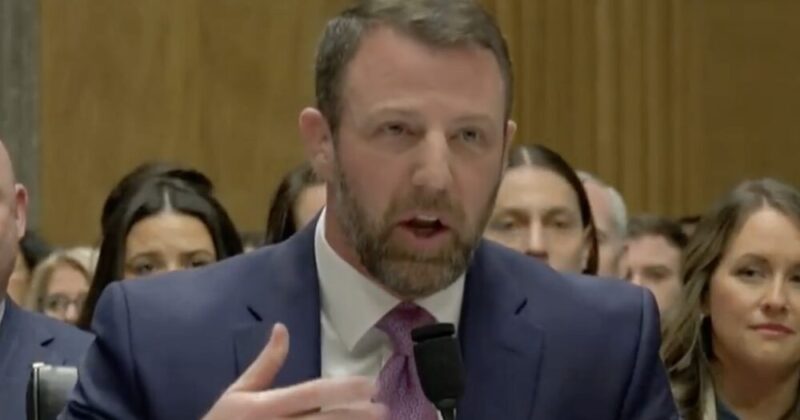
On Capitol Hill, a fierce exchange occurred during a recent confirmation hearing, with Sen. Rand Paul confronting fellow Republican Sen. Markwayne Mullin about his temperament for leading the Department of Homeland Security.
Paul didn’t hold back, accusing Mullin of having “anger issues” and questioning the trustworthiness of someone with such a background to oversee key agencies like ICE and Border Patrol.
“Explain to the American public why they should trust a man with anger issues,” he pressed Mullin, emphasizing the seriousness of the implications.
Mullin quickly countered, using his opening statement to suggest that Paul was undermining his fellow Republicans, referencing their history of disagreements.
“I have to address the remarks the chairman made,” Mullin stated, defending his bluntness and past interactions with Paul. He insisted that he addresses issues directly, rather than scheme behind the scenes.
Addressing allegations of condoning violence, Mullin asserted, “I don’t think anybody should be hit by surprise,” clarifying his stance while maintaining he would always address matters openly.
Despite the heated exchange, Mullin expressed a desire to move forward, indicating that he has reflected on his approach.
“I have a job to do, and I don’t like to fail at anything,” he mentioned, appealing for respect and collaboration.
RAND PAUL: Do you think fighting as a resolution for political differences is a good example for ICE and CBP?
MARKWAYNE MULLIN: As you can notice over my shoulder is my good friend Sean O’Brien. Both of us have shaken hands. Both agree with could’ve done things different. That’s… pic.twitter.com/VMIvSx0YjI
— Aaron Rupar (@atrupar) March 18, 2026
Paul retaliated with sharp criticism, accusing Mullin of failing to take ownership of his past actions. His pointed questions emphasized Mullin’s lack of remorse over contentious remarks.
“You’re unrepentant,” Paul claimed, implying that Mullin’s concerns were more about personal pride than accountability.
Though facing pressure, Mullin stood his ground, clarifying, “I did not say I supported it. I said I understood it.”
In the midst of the clash, Paul referenced prior confrontations, underscoring a narrative of accountability that Mullin found dismissive.
Mullin described Paul’s tactics as “character assassination,” framing the encounter as part of a broader political game.
