

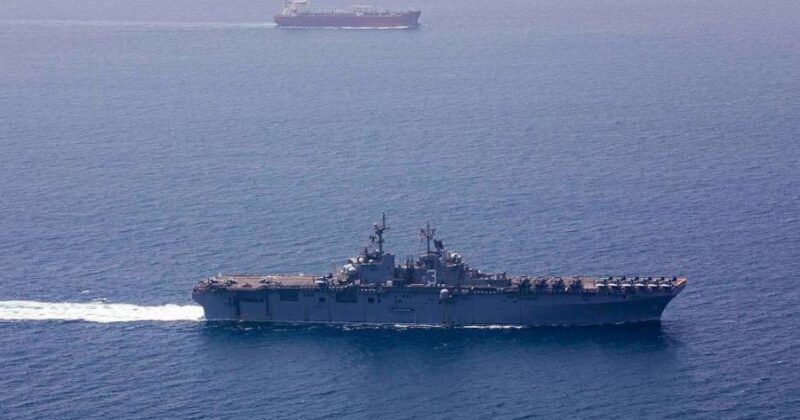
Treasury Secretary Scott Bessent recently announced the U.S. is taking pivotal actions toward re-establishing corridors in the Strait of Hormuz, permitting Iranian oil tankers to navigate the vital channel despite ongoing tensions.
Bessent shared with CNBC that Iranian vessels are already managing to exit the area, ensuring global supply remains consistent. He emphasized the importance of maintaining the flow of oil, particularly as trade discussions unfold in France.
The number of tankers passing through the strait has diminished due to Iranian aggression towards commercial shipping. Nevertheless, Iran continues to export significant volumes of oil, reportedly around 1.5 million barrels a day, a fact that persists despite a robust U.S. naval presence.
The administration expects an increase in tanker traffic before U.S. and allied naval forces begin actively escorting commercial ships through this critical corridor. Reports suggest that vessels supporting India and potentially some from China are successfully navigating the strait.
“We anticipate a natural flow that Iranians are permitting, and for the time being, we are accepting that. Our aim is to ensure global supplies remain stable,” Bessent stated.
RELATED: BREAKING: Iran Attacks Oil Tanker Near Strait Of Hormuz, Sparking Global Oil Fears
The administration’s stance aligns with President Donald Trump’s strategy, urging nations dependent on the Strait of Hormuz to enhance their protective measures over shipping activities, sharing the responsibility rather than burdening the U.S. alone while Iran disrupts international trade.
The Strait of Hormuz serves as a crucial link from the Persian Gulf to the global oil market, accounting for approximately 20% of the world’s oil. Disruptions in this area have immediate implications for American consumers and cause ripples throughout the global economy.
RELATED: Iran Strikes 3 Ships Near Strait Of Hormuz
<pFollowing recent escalations, oil prices have surged nearly 40%. The International Energy Agency has raised alarms over the most substantial oil supply disruption reported to date.
As of Monday, Brent crude prices stood at about $102 per barrel, while U.S. crude was nearing $95. Bessent expressed optimism that prices should significantly drop once the conflicts cease, projecting oil could fall below $80 per barrel after hostilities conclude.
He dismissed speculations suggesting that the administration might engage in oil futures trading, reaffirming that such actions have not been pursued.
Download the FREE Trending Politics App to get the latest news FIRST >>
