

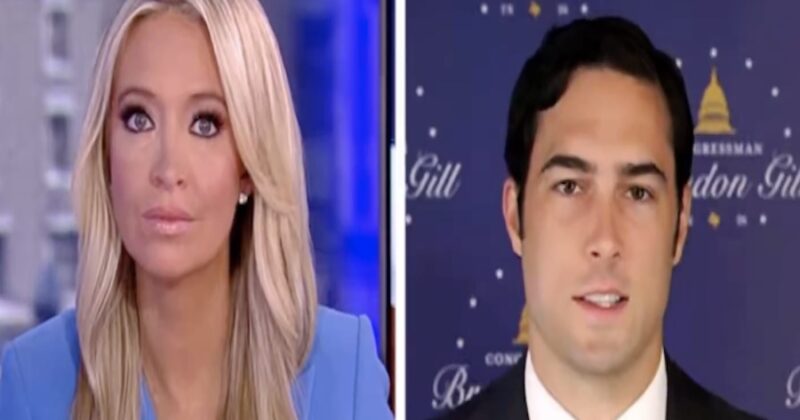
During a recent Fox News appearance, U.S. Representative Brandon Gill (R-TX) revealed that he and a significant number of his colleagues are ready to block Senate initiatives unless the Safeguard American Voter Eligibility (SAVE) America Act is enacted. This House-passed bill includes essential voter ID requirements.
Gill’s comments follow an announcement from Senate Majority Leader John Thune (R-SD), who expressed that he would not resort to a “talking” filibuster for the upcoming vote on the legislation.
This traditional method would necessitate that senators physically debate the bill to obstruct it, making it more challenging for those against it due to time and energy constraints.
Currently, dissenting senators can halt legislation if it does not achieve 60 votes, a situation often referred to as the “zombie” filibuster.
Unless the talking filibuster is initiated, the SAVE Act faces a grim fate. This method could allow it to pass with just a simple majority, potentially secured by a tie-breaking vote from Vice President JD Vance.
Despite the political hurdles, Thune has remarked that the Republican caucus lacks the necessary votes to activate a talking filibuster to counter proposed amendments. Senator Mike Lee (R-UT) has suggested an alternate approach, but Thune insists on progressing to a straightforward floor vote.
Gill and fellow Rep. Anna Paulina Luna (R-FL) stated during their Fox News interview that many House Republicans plan to reject any Senate proposals—excluding funding for the Department of Homeland Security—if Thune does not revise his stance.
“The only priority for the American people is to ensure the SAVE Act becomes law. We cannot afford mere show votes in the Senate; we need this implemented,” Gill emphasized, highlighting the influx of illegal immigrants under the Biden administration as a critical issue for election integrity.
“With the public and the President demanding straightforward measures like voter ID, now is the moment to act. This might be our best chance to achieve this. That’s why I’m refusing to support any legislation aside from DHS funding sent by the Senate.”
When asked about the support among House Republicans for this initiative, Gill indicated broad backing. “I estimate that around 40 or 50 Republicans will not back any Senate bill,” he stated.
“This strategy is vital for House Republicans to maintain a majority in the upcoming elections. Convincing our constituents in November that we had control of both chambers but couldn’t deliver a commonsense voter ID bill would be a tough sell.”
