

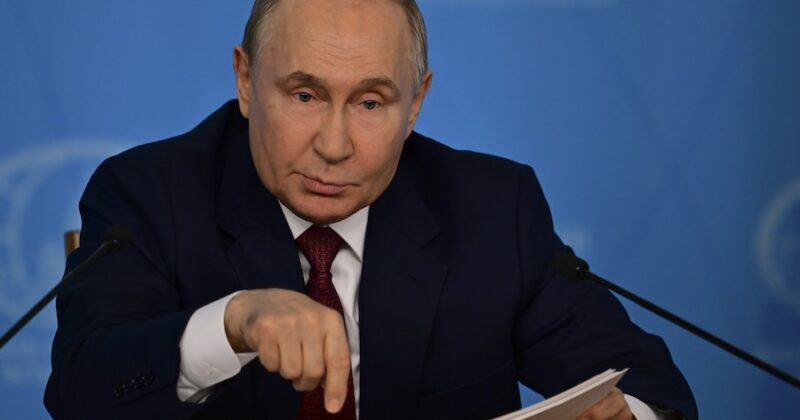
War Secretary Pete Hegseth delivered a clear message on Tuesday that Russia must not interfere in the escalating tensions between the United States, Israel, and Iran. Concerns have arisen regarding Russia’s potential covert support for Tehran amidst these conflicts.
In light of reports suggesting that Russian intelligence may have shared critical information with Iran, Hegseth reiterated the importance of keeping Moscow out of the situation. Such intelligence could include details about U.S. military assets in the region.
“The president maintains strong relationships with world leaders, creating opportunities and options for us in very dynamic ways,” he noted, referencing Trump’s interaction with Putin regarding the ongoing situation.
Despite those diplomatic ties, Hegseth stressed that Washington seeks to prevent any Russian involvement. His comments came as intelligence suggests that Russia’s actions might be facilitating Iran’s knowledge about U.S. military locations.
As the conflict escalates, with the eleventh day of military actions on Tuesday, American and Israeli forces have intensified their operations within Iranian territory. Reports indicate that over 5,000 targets have been struck, encompassing missile sites and naval assets linked to Iranian military efforts.
Hegseth described March 10 as a crucial turning point in the conflict, marking a significant increase in military strikes aimed at undermining Iran’s capabilities.
U.S. military leaders have observed a notable decline in Iranian missile activity, signaling the effective impact of coalition air strikes on Tehran’s offensive resources. Nonetheless, Iran continues to retaliate, expanding the scope of its military actions beyond U.S. forces.
The situation remains tense, with Iran launching additional attacks against Israel and other regional allies, while officials in Tehran persist in their threats toward the United States.
These developments have raised fears of a wider regional conflict, particularly impacting energy markets reliant on the Strait of Hormuz, a crucial passage for global oil trade.
On the political front, uncertainties persist. President Trump has indicated that the conflict may conclude “very soon,” providing a momentary boost to financial markets.
Nevertheless, Israeli leaders have made it clear that any resolution will be reached in close coordination with the U.S., with Foreign Minister Gideon Saar emphasizing joint discussions regarding the conflict’s future.
While there are speculations on potential resolutions, the present military dynamics indicate that the situation remains on an upward trajectory rather than nearing its conclusion.
