

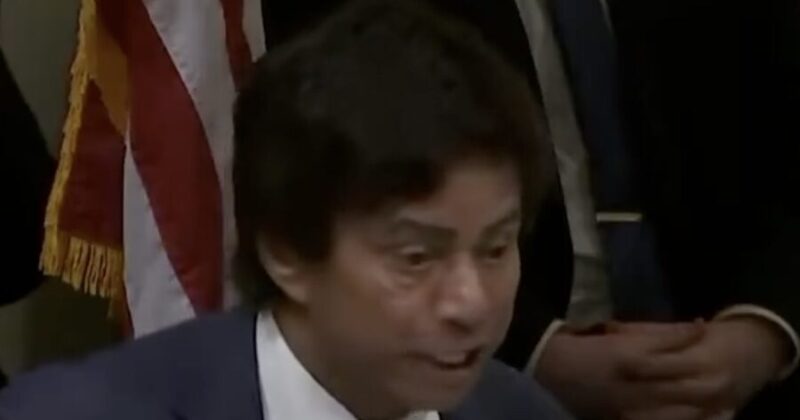
A recent hearing by the House Homeland Security subcommittee took an unexpected turn when Rep. Shri Thanedar (D-MI) chose to criticize President Donald Trump rather than engage in the serious topic of public safety risks related to non-domiciled commercial driver’s licenses.
This controversy centers on licenses issued to non-citizens who do not reside permanently in the U.S. Republicans have pointed out that some states have used these licenses improperly, granting them to applicants who may not meet federal requirements.
The administration under Trump has responded by tightening regulations, emphasizing stronger immigration verification and stricter eligibility criteria to address potential abuses.
Rhetorical Shift
The hearing, chaired by Rep. Josh Brecheen (R-OK), aimed to investigate whether illegal immigrants were obtaining commercial driver’s licenses and if the Department of Homeland Security had coordinated effectively with other agencies for enforcement. Instead of addressing these vital concerns, Thanedar used the platform to launch attacks against Trump.
“This past weekend a convicted felon with bone spurs illegally attacked Iran, launching a protracted war of regime change,” he stated, implying that Republicans were deflecting criticism away from Trump by focusing on immigration.
Challenging Jurisdiction
Thanedar further questioned the hearing’s jurisdiction, suggesting that transportation should fall under a different committee’s purview. He accused Republicans of scapegoating immigrants rather than tackling what he described as Trump’s constitutional and economic issues.
In contrast, Brecheen made it clear that the hearing was focused on the responsibilities of the DHS and the potential dangers of neglecting federal licensing standards. He emphasized the risks posed by non-domiciled CDLs, which go beyond mere paperwork.
Public Safety Concerns
Brecheen articulated that improper issuance of licenses is a growing threat to both public safety and the rule of law, citing audits revealing that numerous licenses in states like California and New York have not complied with federal guidelines.
He also pointed out that dangerous situations can arise when commercial vehicles are in the hands of unqualified drivers, especially with hazardous materials involved. Witnesses at the hearing included officials from Oklahoma and Florida, both advocating for stricter enforcement.
A Pattern of Behavior
Thanedar’s reaction aligns with a broader trend among Democrats to redirect discussions towards Trump. As a vocal critic of the former president, his comments added a political layer to what was intended to be a serious hearing on immigration enforcement.
Ultimately, the hearing encapsulated a familiar scenario in Washington: Republicans arguing for tighter immigration measures to protect American citizens, while Democrats attempted to shift the narrative back to the former president.
