

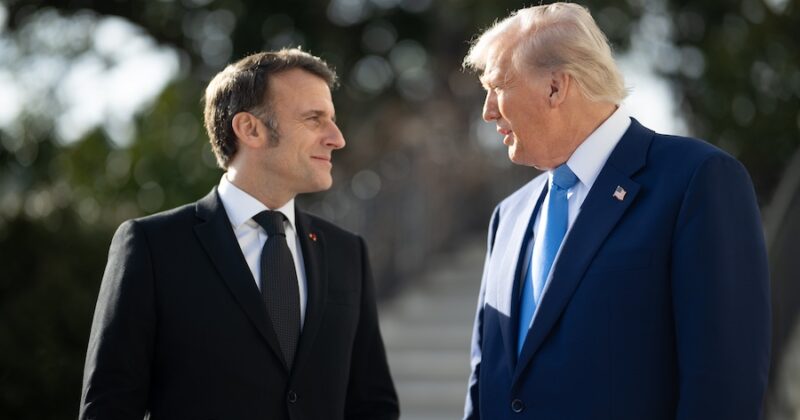
French President Emmanuel Macron said he had ordered the nuclear-powered carrier Charles de Gaulle and its strike group to sail toward the Mediterranean amid ongoing operations after strikes by the United States and Israel against Iran and subsequent Iranian retaliatory attacks across the region.
Task force and timeline
The carrier’s air wing includes about 20 Rafale Marine fighters and airborne early-warning aircraft.
Escort vessels include the frigates L’Amiral Ronarc’h, Alsace, and Chevalier Paul along with the oiler Jacques Chevallier.
The task force also contains elements of a multinational group, including the Italian destroyer Andrea Doria.
French officials said the strike group should be arriving in the region within ten days.
Purpose and additional measures
Macron said the deployment aims to defend allied assets and protect key global shipping routes such as the Strait of Hormuz.
He noted that France maintains defense agreements with Qatar, Kuwait, and the United Arab Emirates.
Additional measures announced included the deployment of Rafale fighters, air-defense systems, and airborne radar platforms to the Middle East in the hours before his address.
Further reinforcements involve the frigate Languedoc and extra air-defense assets headed to waters off Cyprus, with an expected arrival on the evening of March 3.
That movement followed reports of strikes on a British air base on the island.
48 hours after the French government said I was wrong, French President Macron officially announced that the Charles de Gaulle CSG is deploying to the Mediterranean. https://t.co/MWIirK7hhr pic.twitter.com/YnF8GX2UpG
— OSINTtechnical (@Osinttechnical) March 3, 2026
Defensive actions taken
In the same address Macron confirmed French forces had engaged in defensive actions from the outset of the broader conflict by shooting down drones in self-defense to protect allied airspace.
He also reported that at least two French military installations had been damaged in the attacks but that no casualties were reported.
