

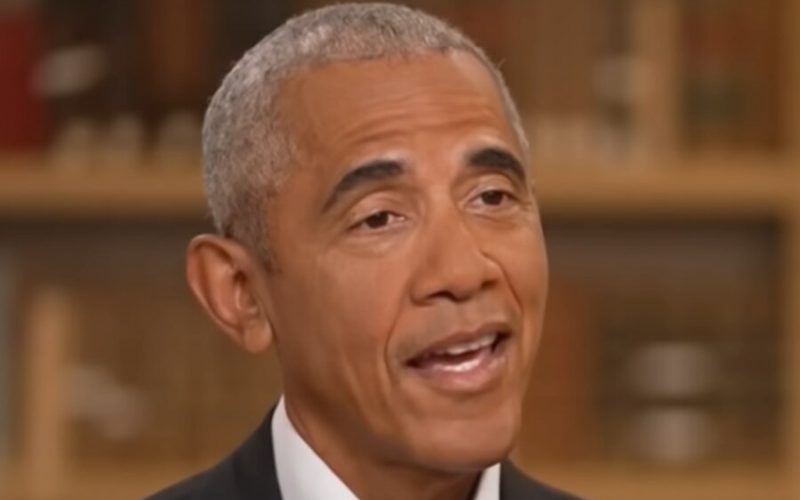
A newly released trove of oral history interviews is shedding light on just how dramatically former President Barack Obama and his closest advisers misjudged the political moment that would ultimately propel Donald Trump to the White House in 2016.
Interviews conducted by Incite Institute at Columbia University in cooperation with the Obama Foundation reveal that Obama’s inner circle largely dismissed Trump as a political novelty rather than a serious contender.
The interviews, more than 450 in total and spanning roughly 1,100 hours of audio and video, include cabinet officials, White House aides and prominent public figures. Notably absent are Obama himself, former first lady Michelle Obama and then–Vice President Joe Biden. But the accounts from top advisers paint a clear picture: few in Obama’s orbit believed Trump could actually win.
Former chief strategist David Axelrod recalled overhearing Trump at the 2011 White House Correspondents’ Association dinner boasting about polling strength. “I know it’s crazy,” Trump was heard saying, “but I’m in front of the polls.”
“I kind of chuckled at it and went to my seat,” Axelrod said. “I don’t think any of us really anticipated that Donald Trump would be a serious candidate for president, much less president.”
That same evening, Obama famously mocked Trump from the stage, ridiculing the reality television star in a segment that quickly went viral. Speechwriter Jon Favreau helped draft the remarks and did not hide his disdain in the oral history. “I thought and still do think that he is a ridiculous human being who deserves to be ridiculed at every possible chance,” Favreau said.
Other aides were equally blunt. Trump was described as a “con man,” a “clown” and a “laughingstock.” At the time, he was best known in political circles for promoting false claims about Obama’s birthplace — the so-called “birther” movement — which deeply irritated the administration.
The interviews suggest that Obama’s team viewed Trump as more of a sideshow than a threat. Even after Trump launched his campaign in June 2015, many still assumed he would flame out in the Republican primary or be easily defeated in the general election by Hillary Clinton.
Former White House press secretary Josh Earnest admitted he publicly downplayed Trump’s candidacy. After Trump proposed a temporary ban on Muslims entering the United States, Earnest told reporters the idea would be relegated to “the dustbin of history.” Looking back, Earnest conceded, “I think I was kind of wrong about that unfortunately.”
The oral history also recounts earlier interactions between Trump and the Obama team. During the 2010 BP oil spill in the Gulf of Mexico, Trump reportedly reached out, offering suggestions to help plug the leak. Axelrod said he found the proposal “preposterous.” Later, Trump pitched building a modular ballroom at the White House to replace the outdoor tents used for state dinners. Axelrod declined, believing it would send the wrong signal during a severe recession.
In retrospect, these moments underscore what many aides now see as a blind spot. The administration, confident in its policy achievements — including economic recovery efforts after the Great Recession, the Affordable Care Act and the operation that killed Osama bin Laden — did not fully grasp the depth of populist dissatisfaction brewing across the country.
Speechwriter Cody Keenan acknowledged that even late in the 2016 campaign, few believed Trump could prevail. “At the time, I don’t think anybody thought Donald Trump was going to win,” Keenan said.
Though Clinton won the popular vote, Trump secured the Electoral College and the presidency, stunning much of the political establishment. Former White House chief of staff Denis McDonough described a somber atmosphere inside the White House in the days following the election. “There’s a pall over everything because you have no idea what the Trump stuff is going to be, and everything feels at risk,” he said.
Yet aides also recalled Obama projecting calm. Favreau said he expected to find the president “depressed, alarmed, panicked,” but instead found him steady. Obama reportedly reminded staff that “history doesn’t move in a straight line” and urged them to take pride in their accomplishments.
For some in the administration, Trump’s victory felt like a repudiation of their governing philosophy. Earnest reflected that Trump’s rise was “a direct rebuke of everything that we had been trying to do for the last 10 years.”
Now, nearly a decade after the 2016 election and with Trump serving his second term, the oral histories offer a candid window into how one of the most powerful political operations in modern history failed to foresee a political earthquake.
